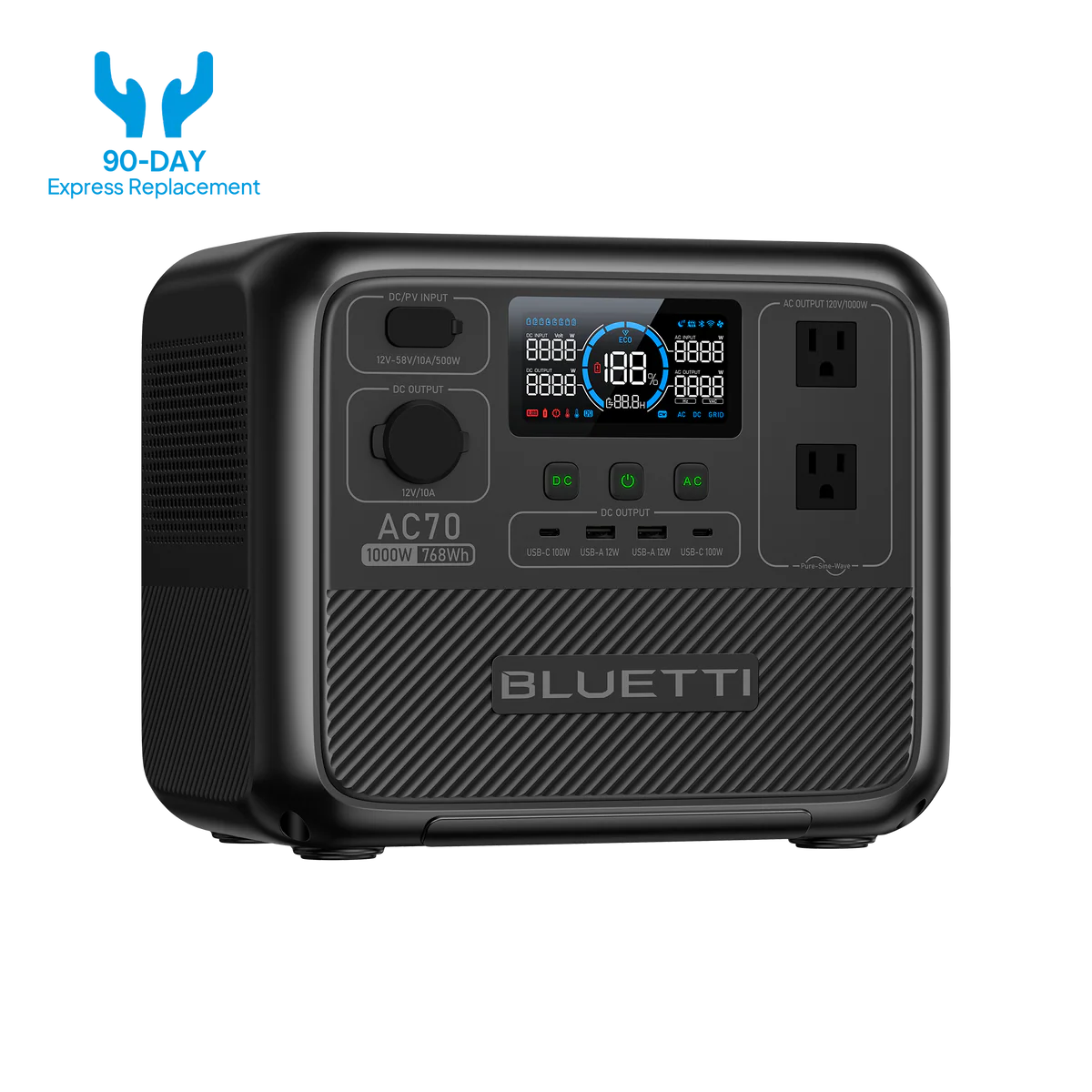
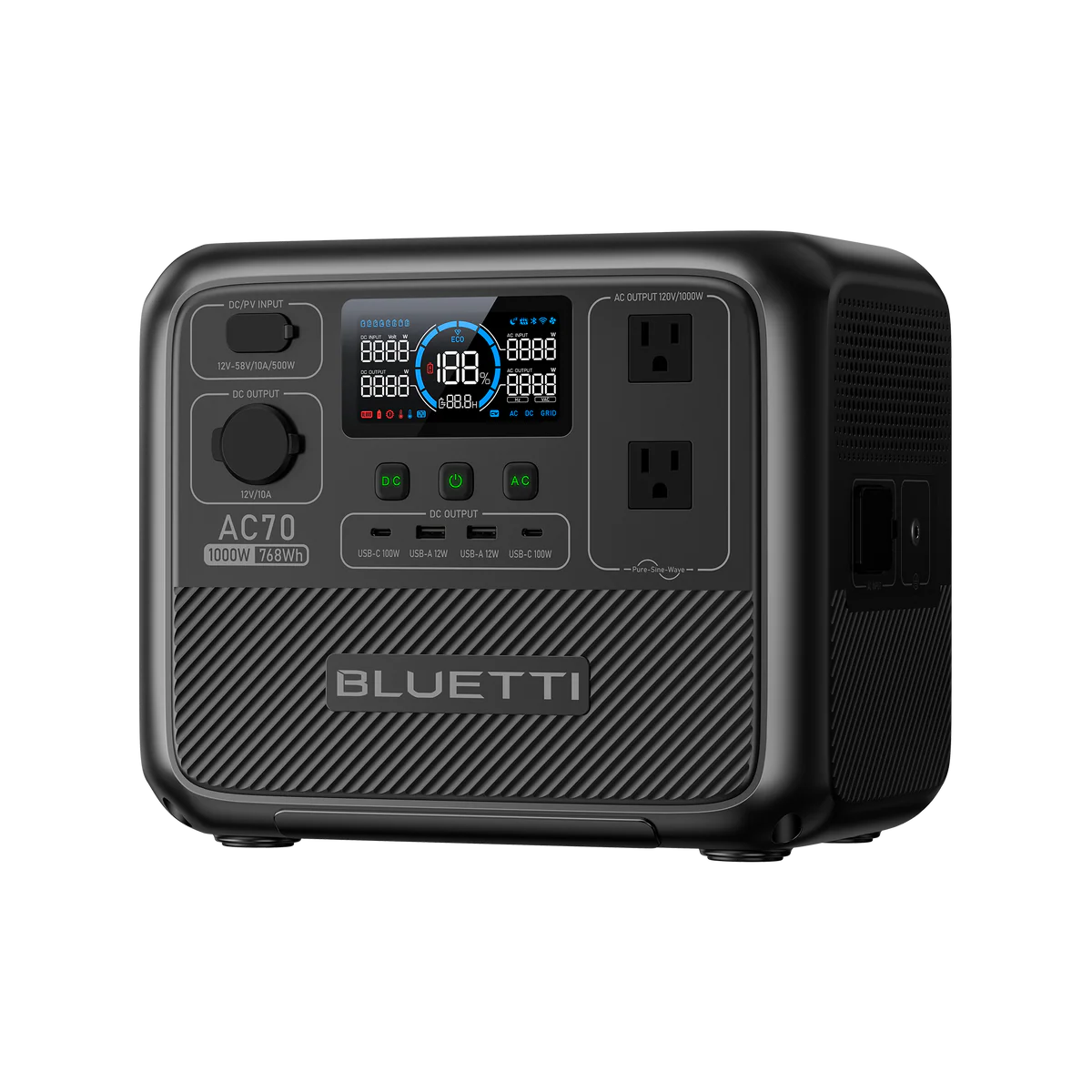
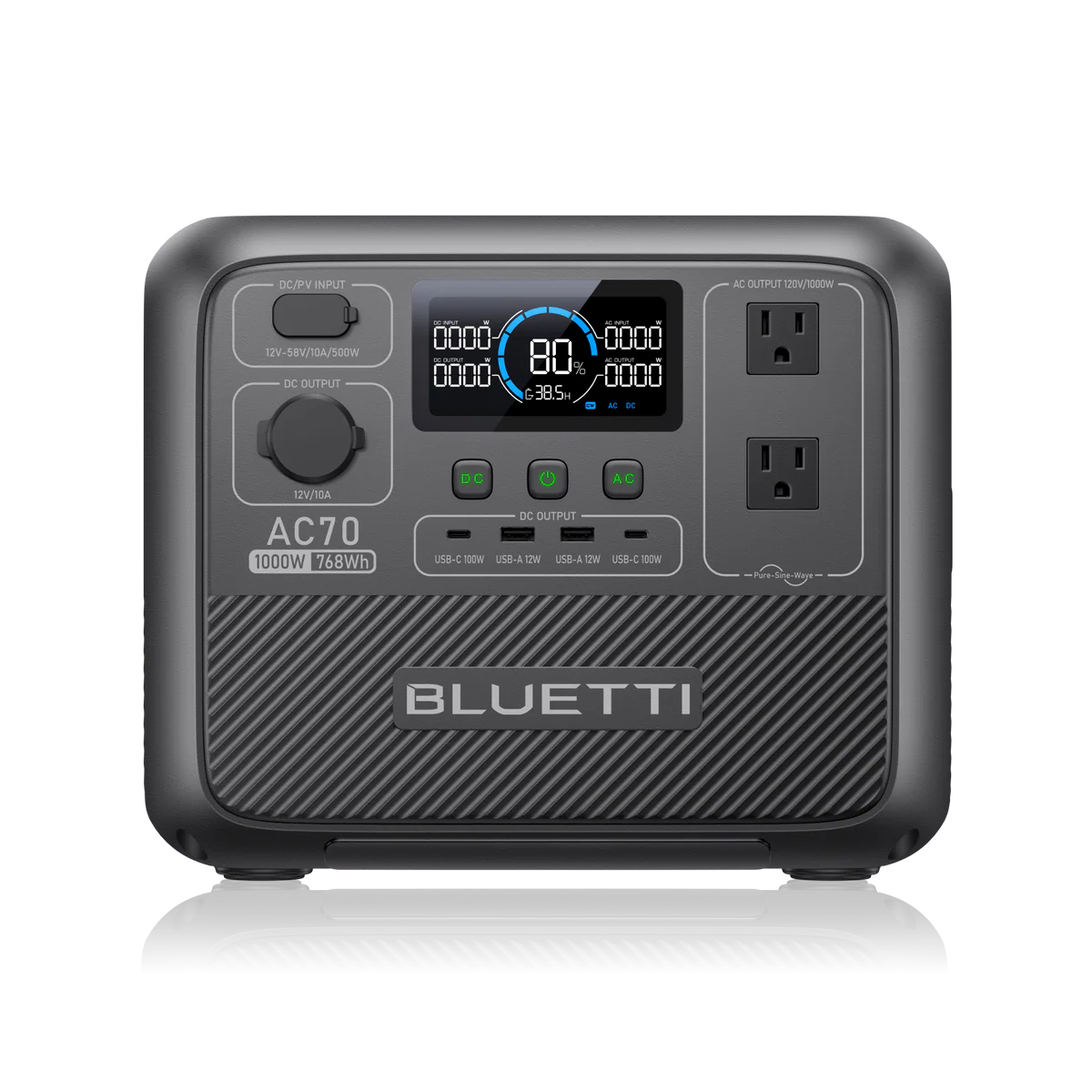
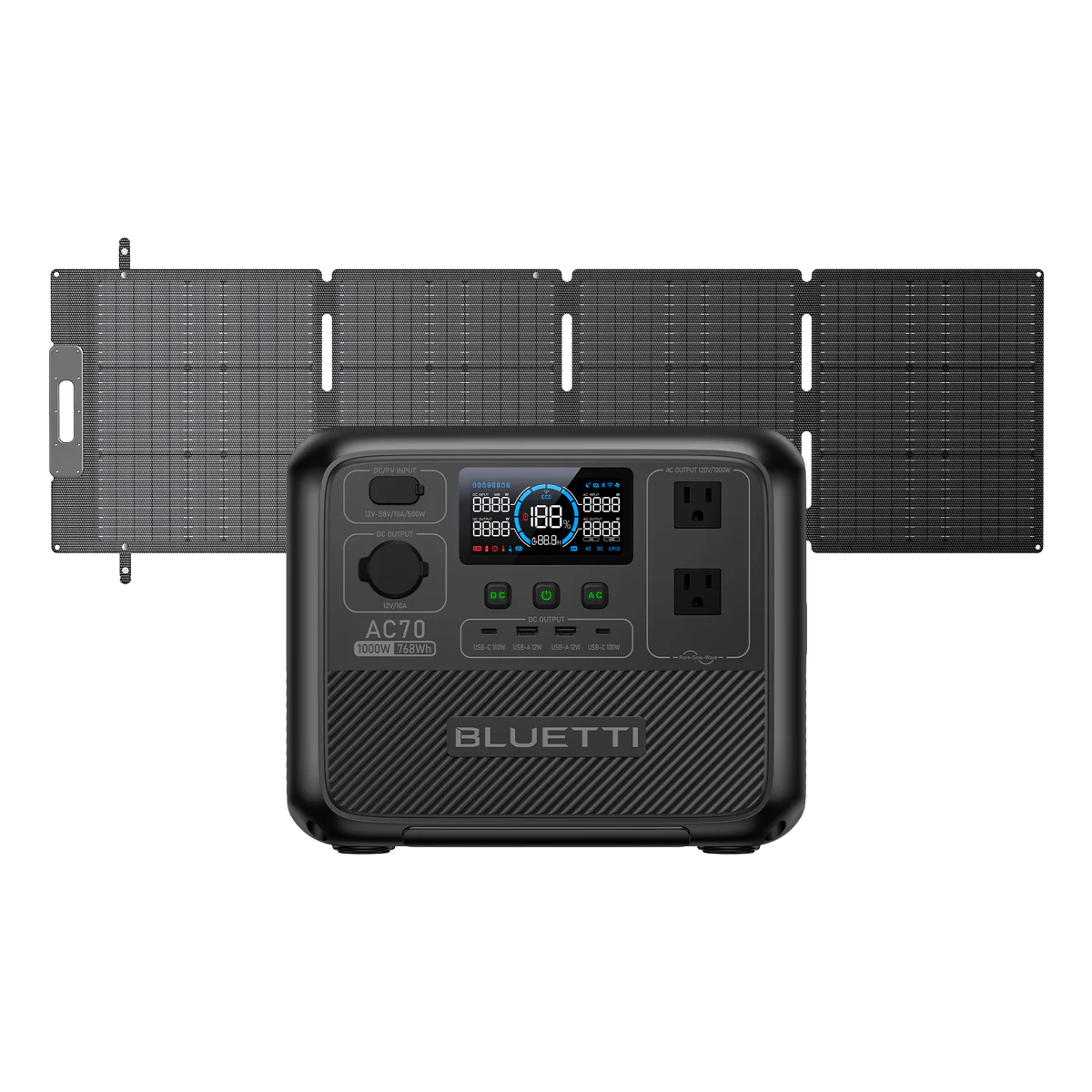
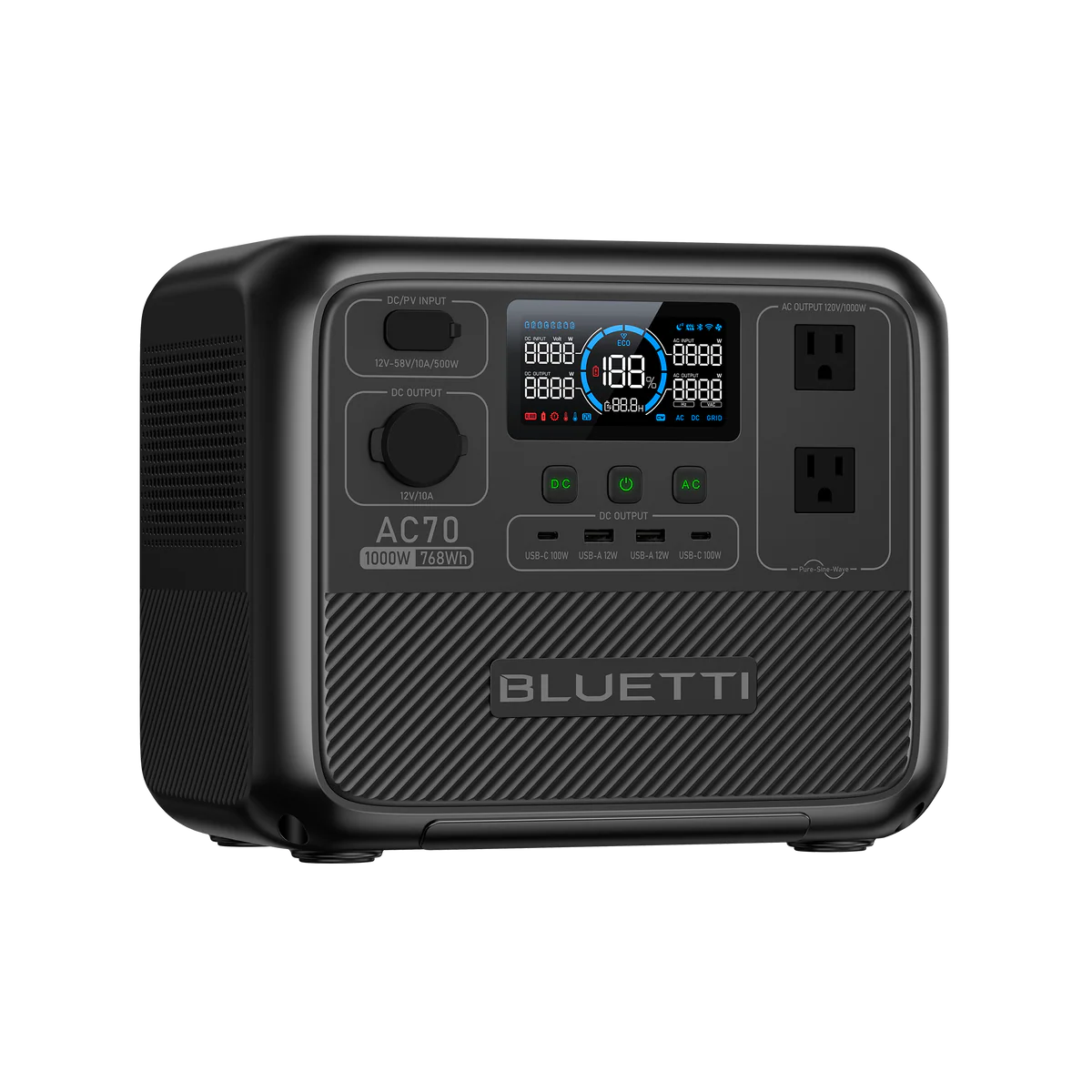
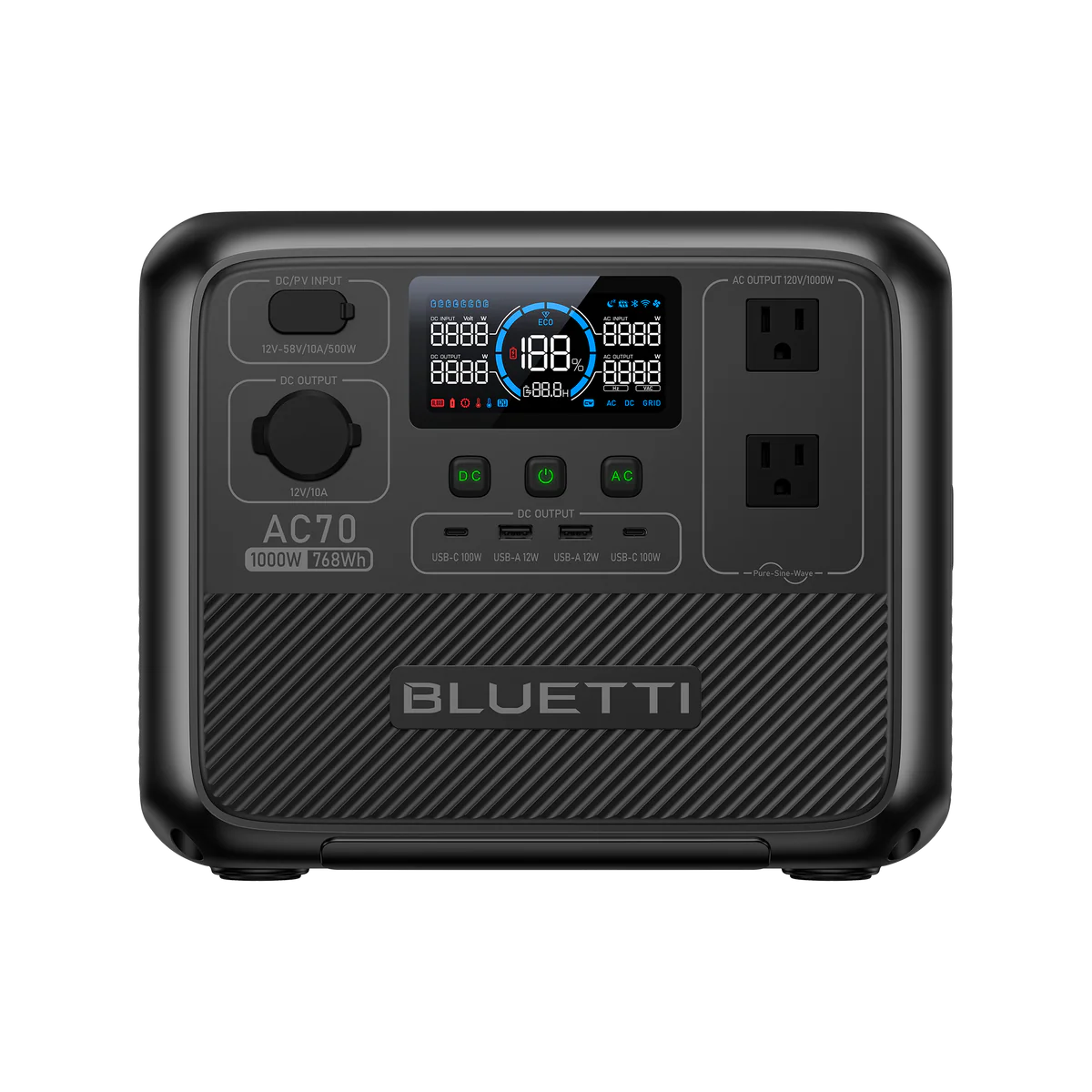
BLUETTI AC70 Portable Power Station
Original price was: $329.00.$309.26Current price is: $309.26.
BLUETTI AC70 Review: The Portable Power Station That Earns Its Price
TLDR
The BLUETTI AC70 is a capable mid-range portable power station that delivers excellent value for campers, van lifers, and home backup users who want fast charging, long battery life, and expandability – without paying flagship prices.
- What it is: 768Wh LiFePO4 portable power station with 1,000W output (2,000W in Power Lifting Mode)
- Who it’s for: Weekend campers, van lifers, emergency home backup users, remote workers
- Top strengths: Blistering fast charging (0-80% in 45 min), class-leading 500W solar input, 3,000+ cycle battery longevity, expandable capacity
- Biggest limitation: Only 2 AC outlets; fan can be audible during lighter loads; heavier than some rivals at 22.5 lbs
- Quick verdict: At $359, the AC70 is a genuinely strong buy in its price range – especially if solar charging or expandability matters to you
Introduction
You’re three days into a camping trip when your phone dies, your partner’s CPAP machine is running low, and the portable fridge you swore would be fine is drawing more than expected. This is the scenario that sells power stations – and the scenario that separates the good ones from the ones that leave you in the dark.
The portable power station market has gotten crowded fast. EcoFlow, Jackery, Anker, and BLUETTI are all fighting for your attention (and your $300-$600), and the spec sheets look almost identical at a glance. But real-world use – the kind you find in Reddit threads, YouTube comment sections, and owner forums – tells a more nuanced story. The BLUETTI AC70 has built a genuine following since its late 2023 launch, and after digging through hundreds of user reports across camping communities, off-grid forums, and deal aggregators, it’s clear this is one of the more honest performers in its class. Here’s what it actually does well, where it falls short, and who should skip it entirely.
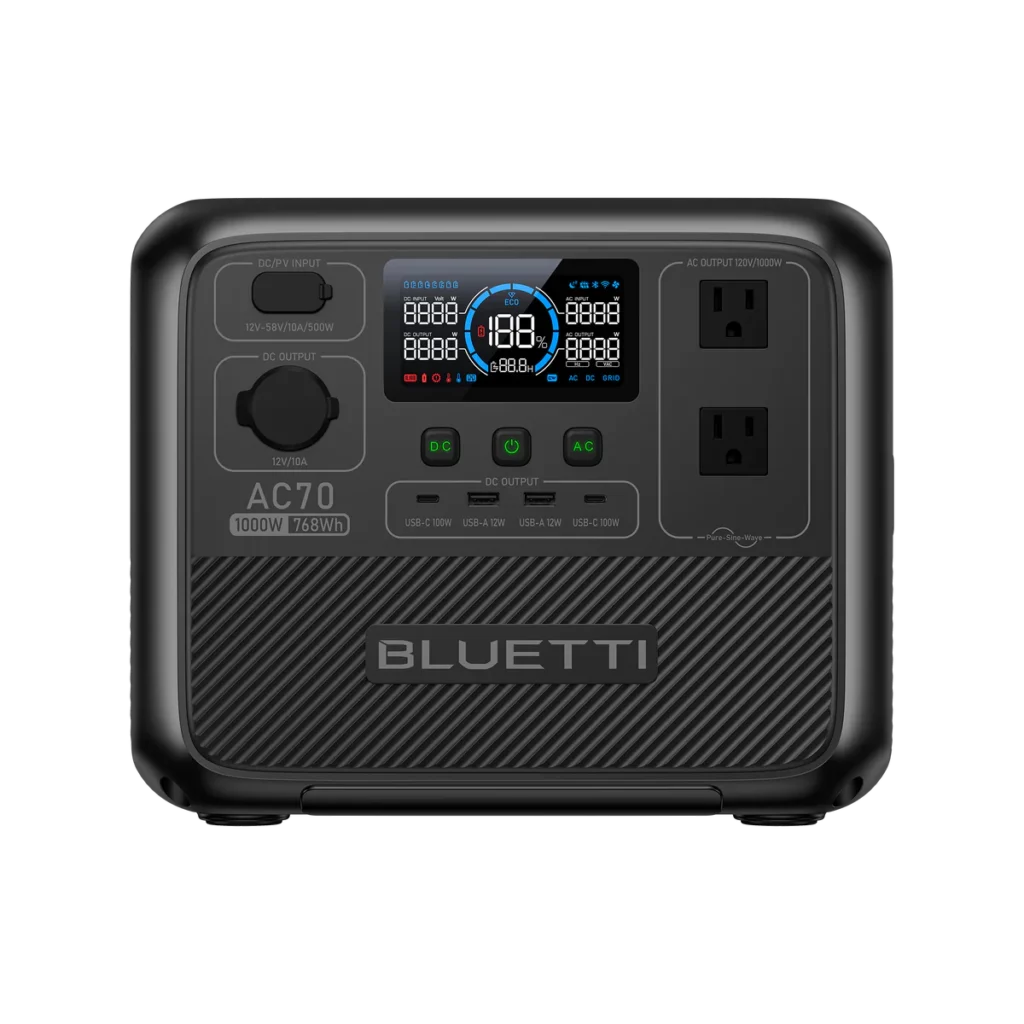
Photo: BLUETTI
What Is the BLUETTI AC70 and Who Is It For?
The AC70 is BLUETTI’s entry into the mid-range portable power station segment – sitting above their compact EB3A (268Wh) and below their beefier AC180 (1,152Wh). It runs on a 768Wh LiFePO4 battery with a rated output of 1,000W, a surge of 1,500W, and a Power Lifting Mode that temporarily pushes output to 2,000W for resistive loads like hair dryers, electric kettles, and space heaters.
The people most drawn to it tend to fall into a few clear camps. Weekend car campers who want to run a small fridge, charge devices, and maybe power a fan overnight. Van lifers who need a compact, expandable unit that can be solar-recharged daily. Home backup buyers who want something reliable sitting in a closet for outages. And remote workers who need to power a laptop and monitor for hours without hunting for a wall outlet. What all these users share is a preference for practical, reliable power over raw wattage – and the AC70 is built for exactly that.
Key Features: What the Specs Actually Mean in Practice
Fast Charging That Consistently Delivers
The headline spec on the AC70 is its charging speed, and this is one area where real-world users consistently back up BLUETTI’s claims. With Turbo Charging mode enabled via the app, the unit pulls up to 950W from a wall outlet and hits 80% in roughly 45 minutes – full charge in about 1.5 hours. Campers and van lifers on forums repeatedly note this as a standout advantage: you can top it up at a campground hookup in the time it takes to eat breakfast.
The 500W solar input is arguably even more impressive for the price bracket. Most competitors at this price limit solar intake to 200-300W – meaning a full solar recharge can take five to eight hours or more. The AC70’s higher ceiling means you can genuinely refill it in about 2 hours with the right panel setup and decent sunlight. Outdoor users who prioritize solar self-sufficiency consistently rank this as the feature that tips them toward the AC70 over rivals.
Power Lifting Mode – Useful, With Caveats
Power Lifting Mode is a genuinely clever addition that lets the AC70 punch above its weight class for specific appliances. Enable it via the BLUETTI app and you can run heating devices – electric blankets, kettles, hair dryers – that would normally exceed the 1,000W rated limit. BLUETTI is upfront that this only works for resistive loads, not appliances with motors or compressors. Users on the BLUETTI community forum have confirmed this limitation the hard way, occasionally triggering warnings when connecting diesel heating pumps or attempting to run air conditioners through the mode. The feature works well within its intended use case; just don’t expect it to run your window AC unit.
LiFePO4 Battery and Long-Term Value
The AC70 uses lithium iron phosphate chemistry rather than the older NMC lithium-ion batteries found in some competing units. The practical difference is significant: 3,000+ charge cycles to 80% capacity, versus 500-800 cycles on older NMC designs. If you cycle it once a day, that’s roughly eight to ten years of use before noticeable degradation. Combined with BLUETTI’s 5-year warranty, this is one of the more credible long-term value propositions in the space. Long-term buyers and emergency preparedness-focused users in forums specifically cite battery chemistry as a deciding factor, and the AC70 earns its score here.

Photo: BLUETTI
App Control and UPS Functionality
BLUETTI’s app connects via Bluetooth and gives you real-time wattage monitoring, charging mode selection (Silent, Standard, Turbo), and battery percentage. Reviewers across multiple platforms find it functional and straightforward – you get what you need without a steep learning curve. The app is not as polished as EcoFlow’s offering, which supports Wi-Fi connectivity and more detailed analytics, but for most users it does the job well.
The AC70 also supports UPS (uninterruptible power supply) functionality with a 20ms switchover time – fast enough for most sensitive electronics. Slickdeals forum users have noted one limitation here: there’s no built-in time-of-use scheduling for AC charging, meaning you can’t set it to charge during off-peak electricity hours via the app alone. An external outlet timer is the workaround, which is a bit clunky for a feature that competitors are starting to bake in natively.
Expandability – A Real Differentiator
One of the AC70’s more underappreciated features is its ability to expand capacity by connecting to BLUETTI’s B80 expansion battery (806Wh), pushing total capacity to 1,574Wh. The connection uses an aviation-style plug that users describe as secure and weather-resistant. This modularity means you can start with the base AC70 at $359 and scale up later if your power needs grow – rather than buying a larger unit upfront and paying for capacity you might not use.
Real-World Performance: What Users Actually Report
Across camping blogs, outdoor forums, and product review threads, a few patterns emerge consistently. Users running portable fridges (around 50-65W draw) report getting 8+ hours of runtime, which tracks with the 768Wh capacity at that load. Laptop users running multiple charges throughout the day find it easily handles a full workday. Paddleboard inflators, mini fans, heated blankets – these are the glamping comforts that actual AC70 owners repeatedly name as their favorite use cases, and the unit handles them without drama.
Where users run into friction is at the edges. The fan behavior generates some discussion on the BLUETTI community forum. At lighter AC loads (40-120W), the fan can run continuously at a low speed, which some users find distracting in quiet bedroom settings. A few owners of the closely related AC70P have reported a high-frequency electrical buzz at low loads – a firmware-related issue that is less commonly cited on the standard AC70 but worth knowing about. This is the kind of detail that doesn’t show up in marketing copy but matters if you’re planning to use the unit as a silent overnight backup.
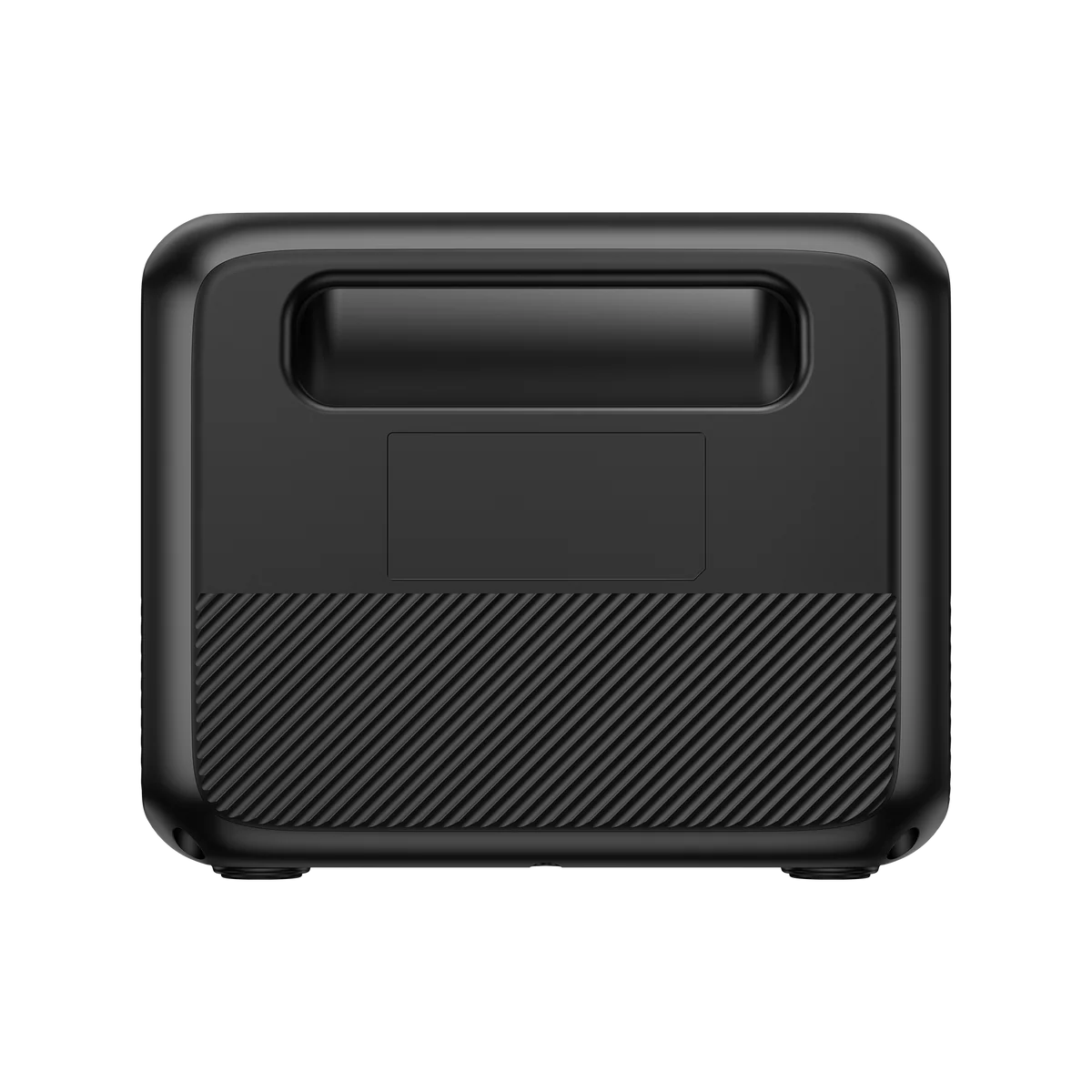
The weight – 22.5 lbs – comes up repeatedly as a trade-off. It’s manageable with the built-in handle, and most users accept it as the price of a 768Wh LiFePO4 battery in a compact form factor. But reviewers comparing it directly to the EcoFlow River 2 Pro (which offers the same 768Wh capacity at just 17.6 lbs) note that the portability gap is real if you’re carrying it long distances. The off-center handle placement also draws some criticism – it can feel unbalanced when fully loaded.
The two AC outlets is another recurring limitation. For users who want to run multiple household appliances simultaneously, two outlets is constraining, especially when competitors like the EcoFlow River 2 Pro offer four. If you’re picturing plugging in a fridge, a fan, and a lamp at the same time, you’ll be reaching for a power strip.
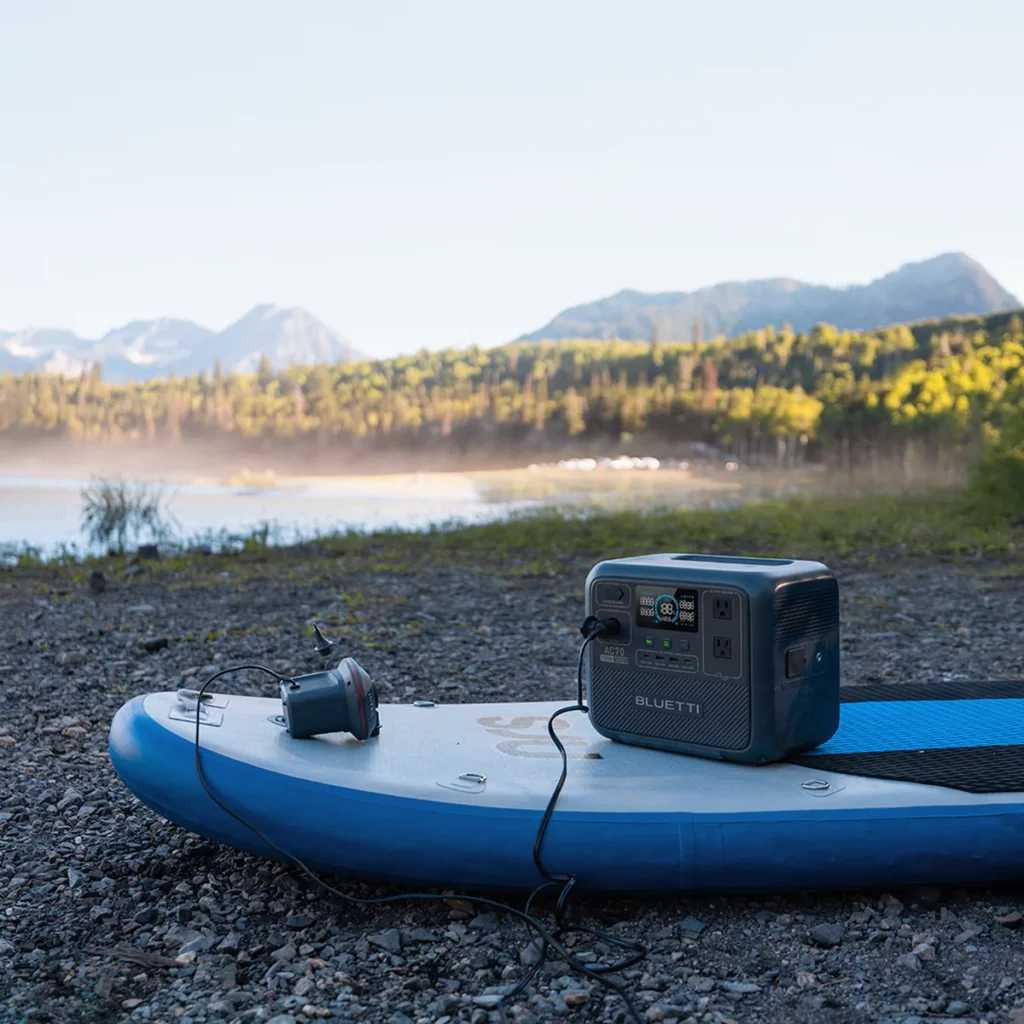
Photo: BLUETTI
Pricing and Value: Where Does It Actually Land?
The AC70 lists at $359 from BLUETTI directly, which is competitive for a 768Wh LiFePO4 unit with 500W solar input and app control. Street prices via AliExpress (BLUETTI’s official store) have been seen significantly lower during sales – deal communities have tracked prices as low as $230-$265 with promotional codes, though buying from AliExpress introduces some customer service friction that not all buyers are comfortable with.
Compared to the EcoFlow River 2 Pro (similar capacity, typically $349-$499 depending on sales), the AC70 wins on solar input and expandability but loses on weight, outlet count, and app refinement. Compared to the Jackery Explorer 1000 Pro (similar capacity, typically $699+), the AC70 wins on price and solar input while losing on AC outlet count and raw capacity. The AC70’s 5-year warranty beats Jackery’s 3-year coverage – a meaningful advantage for buyers thinking long-term.
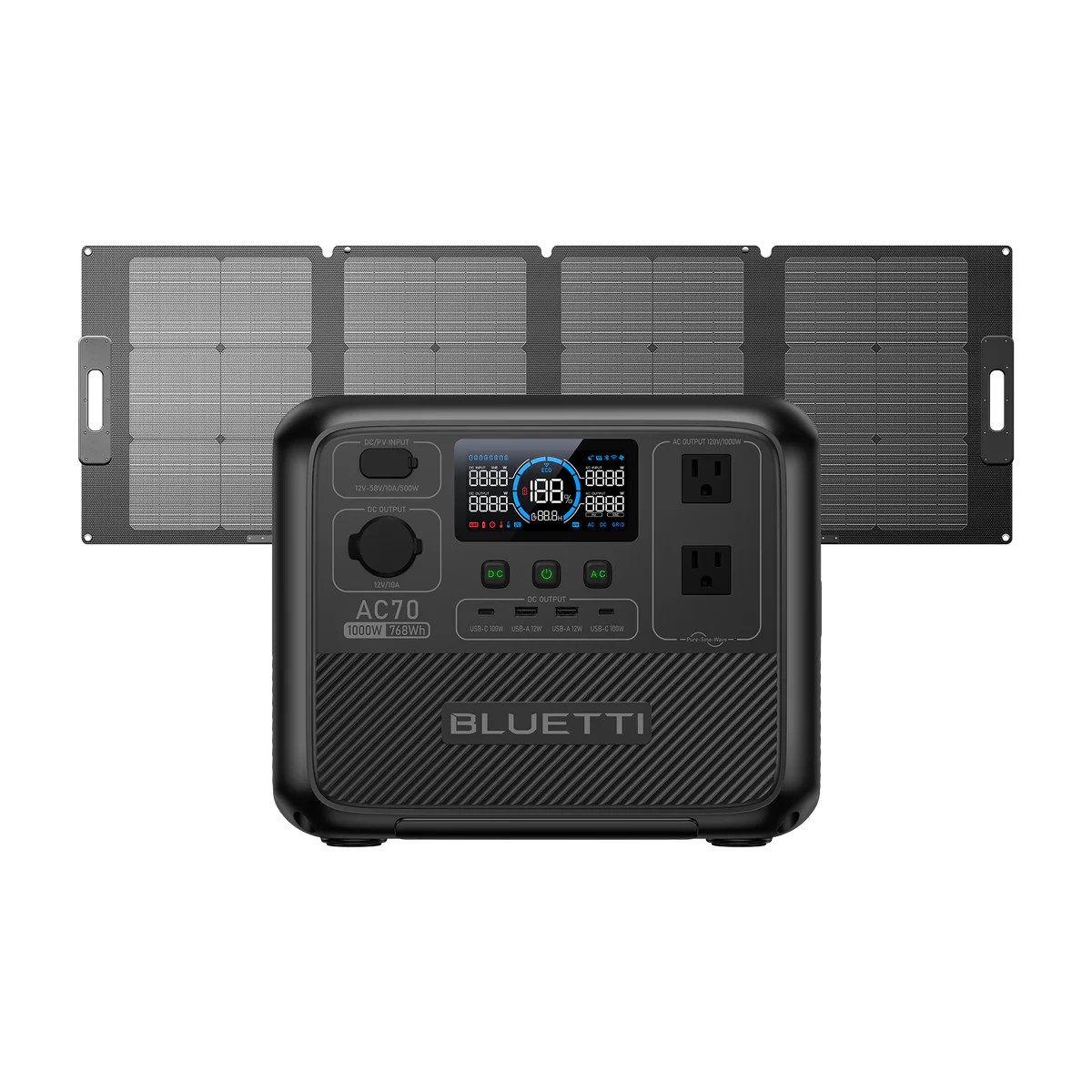
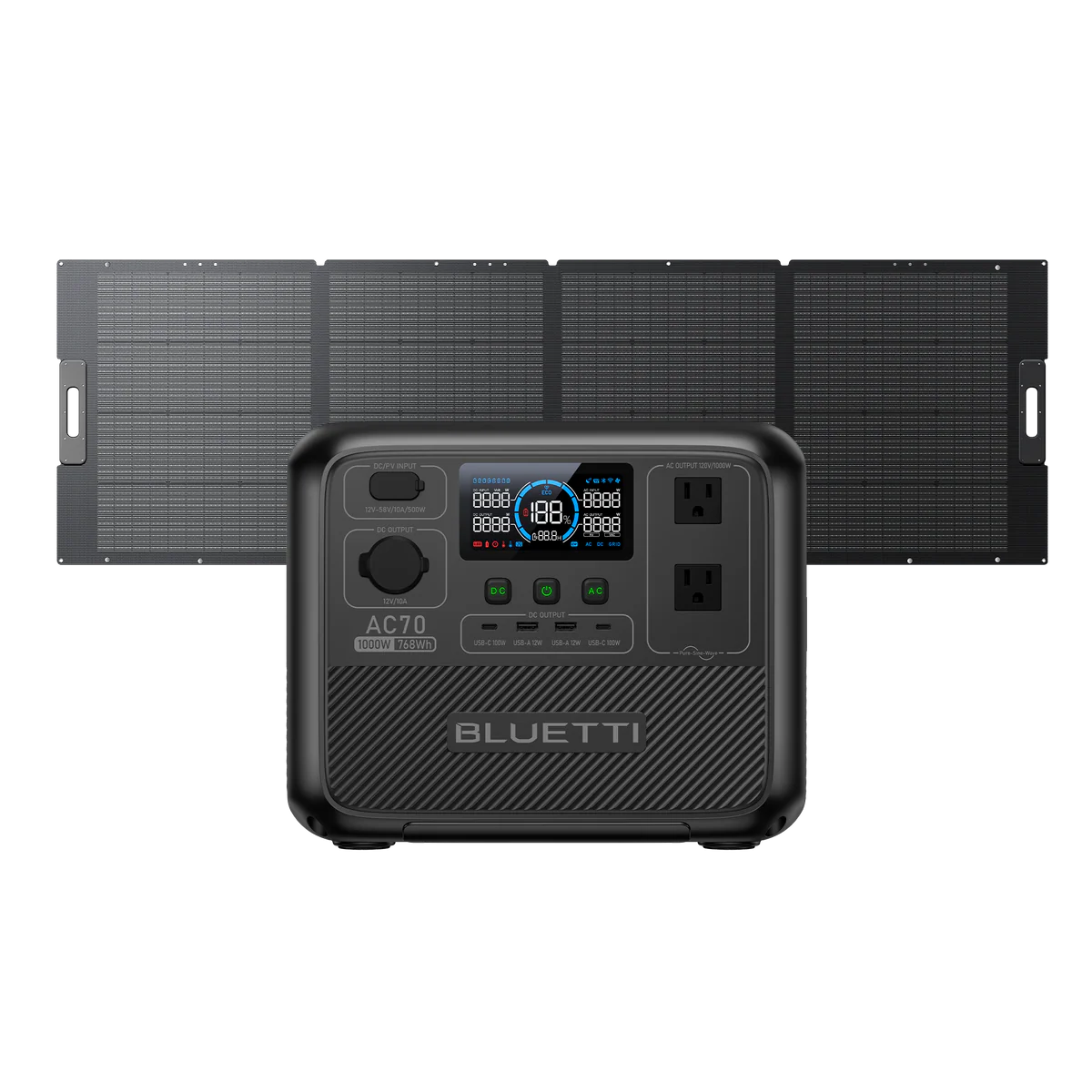
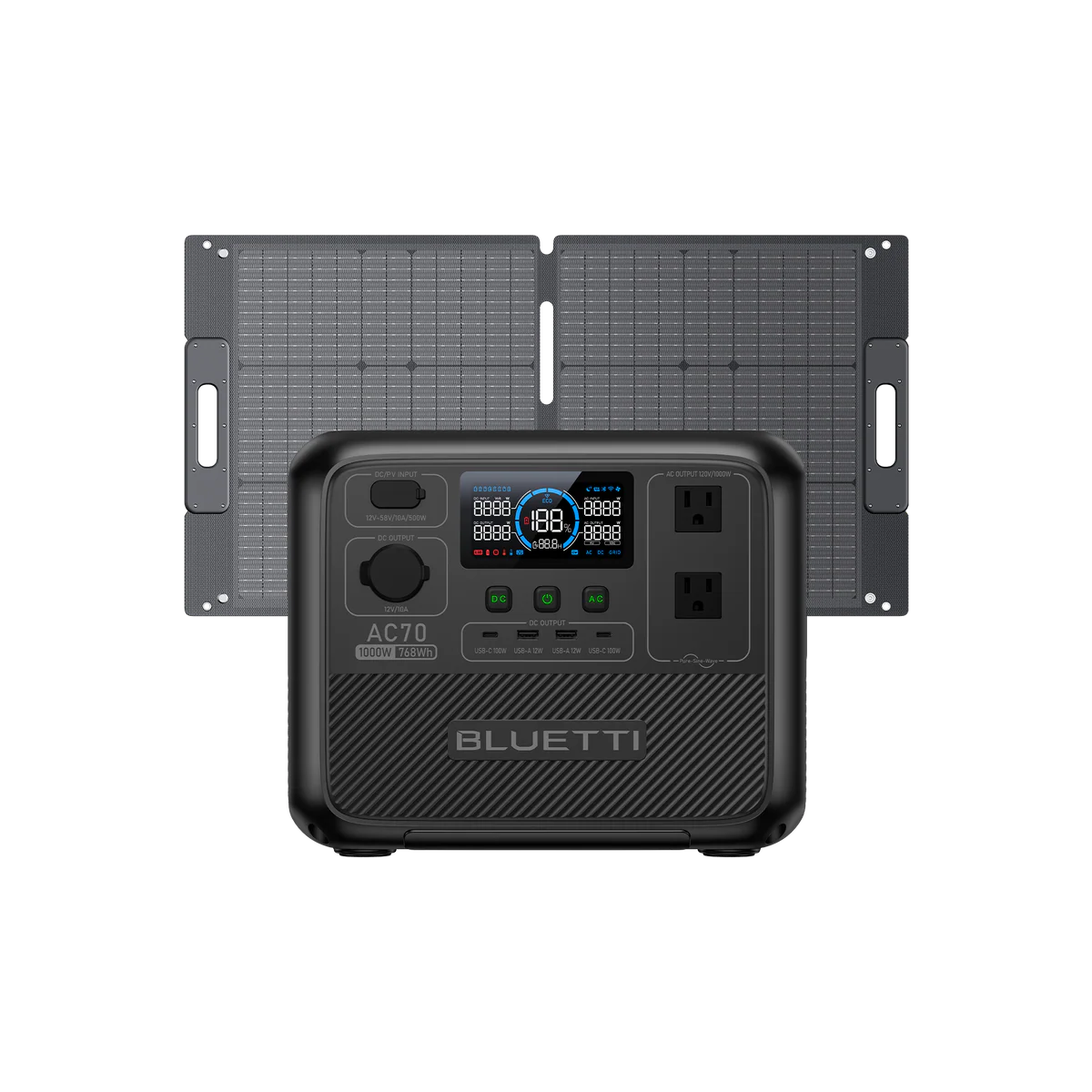
The bundle options – AC70 paired with solar panels ranging from 100W to 350W – add value for buyers who want to go solar-ready from day one, though the 350W panel bundle crossing $1,000 starts to compete with a different tier of product altogether.
Who Should Buy the BLUETTI AC70
The AC70 makes the most sense for car campers and van lifers who prioritize solar self-sufficiency and plan to add capacity over time. The 500W solar input and B80 expansion compatibility give it a forward-looking flexibility that purely fixed-capacity units can’t match. It’s also a solid choice for home emergency backup buyers who want LiFePO4 longevity and the fastest possible recharge from a wall outlet during brief grid restores.
Remote workers who need to power a laptop, monitor, and phone through a full workday without grid access will find the AC70 reliable. Users who specifically need to run heating appliances – electric blankets, portable heaters – while camping will appreciate Power Lifting Mode for that extra headroom.
Who Should Look Elsewhere
If you need more than two AC outlets simultaneously without a power strip, look at the EcoFlow River 2 Pro or step up to the BLUETTI AC180. If weight is a primary concern – you’re hiking to your campsite or carrying the unit frequently – the EcoFlow River 2 Pro’s 5-pound weight advantage is worth considering. If you plan to use the unit as a silent bedroom backup and noise sensitivity matters to you, research the fan behavior more carefully before committing.
Heavy-duty users planning to run power tools, large appliances, or anything requiring sustained 1,500W+ output should step up to a higher-capacity unit – the AC70 is not designed for that workload and will reach its limits quickly.
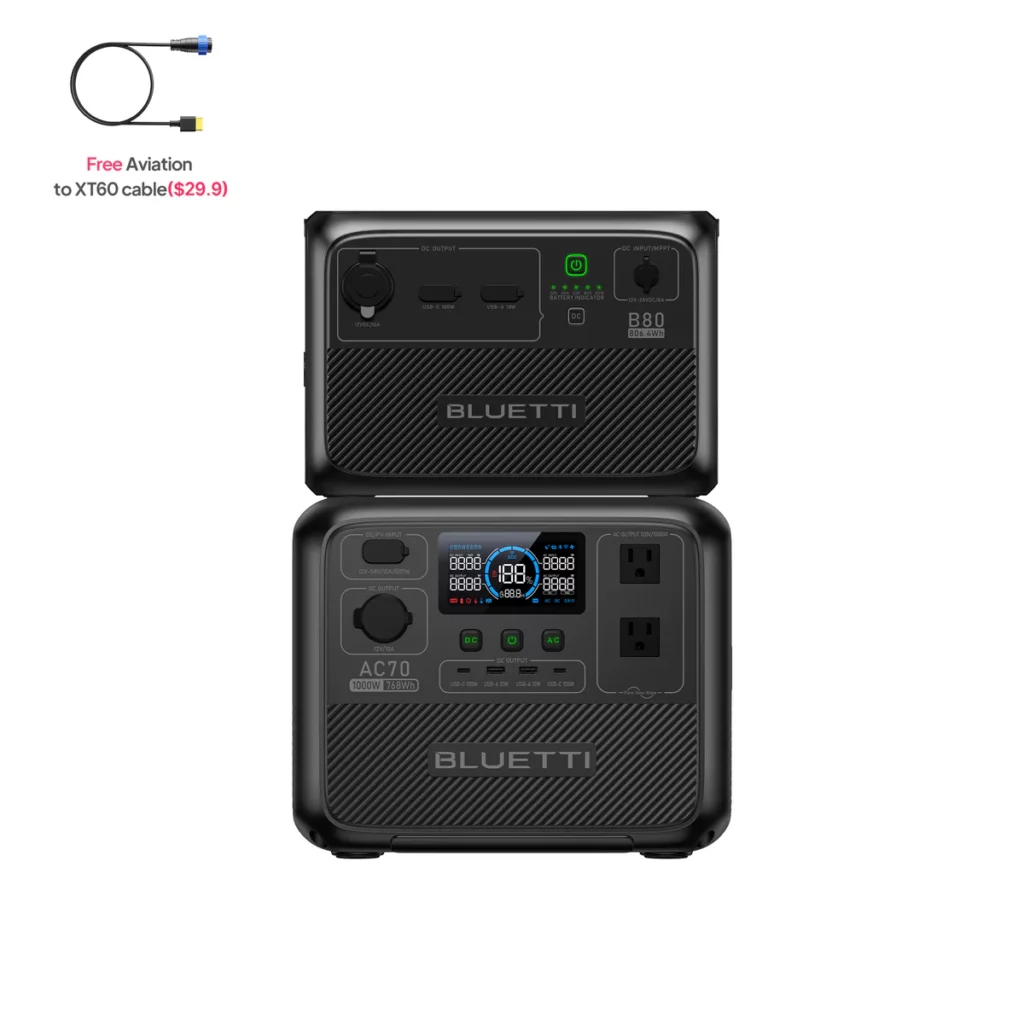
Photo: BLUETTI
Bottom Line
The BLUETTI AC70 delivers on its core promises: fast charging from both wall and solar, long-lasting LiFePO4 chemistry, useful Power Lifting Mode, and a genuine path to expanded capacity. These aren’t just spec-sheet wins – they’re backed up consistently by real-world users across camping communities and off-grid forums. The trade-offs are real but manageable: it’s heavier than some rivals, limited to two AC outlets, and the fan behavior at light loads can be noticeable in quiet environments.
At $359 retail (and lower on sales), it sits in a price range where the competition is fierce, but the AC70 holds its own. If your priorities are solar charging speed, battery longevity, and future expandability – rather than the lightest package or the most app features – this is a power station that will serve you well for years without surprises. What would push you to choose the AC70 over EcoFlow or Jackery – solar input, expandability, or something else entirely? Let us know in the comments.
FAQ
How long does the BLUETTI AC70 take to charge from a wall outlet?
With Turbo Charging mode enabled in the BLUETTI app, the AC70 charges from 0 to 80% in approximately 45 minutes and reaches full charge in around 1.5 hours. Standard charging without Turbo mode takes longer – closer to 2+ hours. The unit automatically stops charging to prevent overcharging.
Can the BLUETTI AC70 run a CPAP machine overnight?
Yes, for most users. A typical CPAP machine draws between 30-60W depending on settings and whether humidification is used. At that draw rate, the AC70’s 768Wh capacity would theoretically support 12+ hours of runtime – more than enough for a full night’s sleep. Many users in camping and medical-use communities confirm this use case works well.
What’s the difference between Power Lifting Mode and normal operation?
Standard operation delivers up to 1,000W continuously. Power Lifting Mode temporarily allows the unit to power resistive loads up to 2,000W – think hair dryers, electric kettles, space heaters, and electric blankets. Importantly, this mode does not work with motor-driven appliances like air conditioners, washing machines, or compressor fridges, whose startup surges can far exceed 2,000W.
Is the BLUETTI AC70 waterproof or weather-resistant?
No. The AC70 has no official IP waterproofing rating. BLUETTI’s documentation confirms it should not be exposed to rain or moisture, and should not be laid on its side during use or storage. For outdoor use, keep it protected from direct weather exposure.
How does the AC70 compare to the EcoFlow River 2 Pro?
Both units share a 768Wh LiFePO4 battery and similar pricing. The AC70 has a higher solar input (500W vs. 220W), is expandable with additional batteries, and delivers 1,000W continuous output versus the River 2 Pro’s 800W. The River 2 Pro is lighter (17.6 lbs vs. 22.5 lbs), has four AC outlets versus two, a more refined app with Wi-Fi connectivity, and is generally considered sleeker to carry. Which wins depends on whether solar charging speed and expandability or portability and outlet count matter more to you.
Can I use the AC70 while it’s charging (pass-through charging)?
Yes. The AC70 supports simultaneous charging and discharging. This makes it useful as a UPS for sensitive electronics, with a switchover time of approximately 20ms – fast enough to protect most devices from a momentary power interruption.
How many charge cycles does the AC70 battery last?
The LiFePO4 battery is rated for 3,000+ cycles to 80% of original capacity. Cycling it once daily, that translates to roughly eight to ten years of useful life – significantly longer than older NMC lithium-ion alternatives rated at 500-800 cycles.
Can I expand the AC70’s capacity with additional batteries?
Yes. The AC70 supports capacity expansion via the B80 (806Wh), B230 (2,048Wh), or B300 (3,072Wh) expansion batteries when used in Power Bank Mode. The B80 combination is the most popular, bringing total capacity to 1,574Wh. Connection uses an aviation-style plug that users consistently describe as secure.
What solar panels work best with the BLUETTI AC70?
The AC70 accepts solar panels with MC4 connectors rated between 12V-58V open circuit voltage. BLUETTI recommends its own PV120, PV200, or PV350 panels (one PV350 or two PV200s for maximum 500W input). Third-party panels with compatible MC4 connectors and matching voltage specs will also work, but always verify open circuit voltage stays within the 12-58V range.
Does the BLUETTI app require Wi-Fi or just Bluetooth?
The BLUETTI app connects via Bluetooth only – there is no built-in Wi-Fi connectivity on the AC70. This means app control is limited to Bluetooth range (typically around 30 feet). EcoFlow’s competing units support Wi-Fi for remote monitoring from anywhere, which is a notable difference for users who want to check battery status remotely.