Nanoleaf LED Light Therapy Face Mask
$149.99
Does the Nanoleaf LED Light Therapy Face Mask Actually Work?
TLDR
The Nanoleaf LED Light Therapy Face Mask is a solid entry-level red light therapy device from a tech brand that genuinely knows its way around LEDs, priced between $200 and $250.
- What it is: A flexible, medical-grade silicone LED face mask with 432 LEDs across 7 light therapy modes plus near-infrared (NIR)
- Who it’s for: Light therapy beginners, frequent travelers, and budget-conscious skincare enthusiasts
- Top strengths: Portable and cordless during use, therapeutic dosing hits the clinical sweet spot, strong LED density for the price
- Biggest limitation: Fit is optimized for larger and longer face shapes – smaller faces will struggle more than the marketing suggests
- Quick verdict: A genuinely competent first attempt that outperforms most direct competition, with comfort quirks that matter more on some faces than others
Introduction
LED face masks have been quietly moving from spa back rooms to bathroom shelves for years, and the market is now flooded – mostly with overpriced hard-shell gadgets that look like something from a sci-fi movie and deliver results ranging from “maybe” to “definitely not.” So when Nanoleaf, a company that has spent years refining LED technology for smart home lighting panels, announced its own LED Light Therapy Face Mask, skincare communities paid attention.
The question was obvious: does LED expertise in living rooms translate to LED expertise on your face? The answer, based on what a wide range of reviewers and real users are consistently reporting, is a cautious but genuine yes – with some important caveats around fit, wavelength accuracy, and which of those seven light modes you should actually trust.
What the Nanoleaf LED Light Therapy Face Mask Is
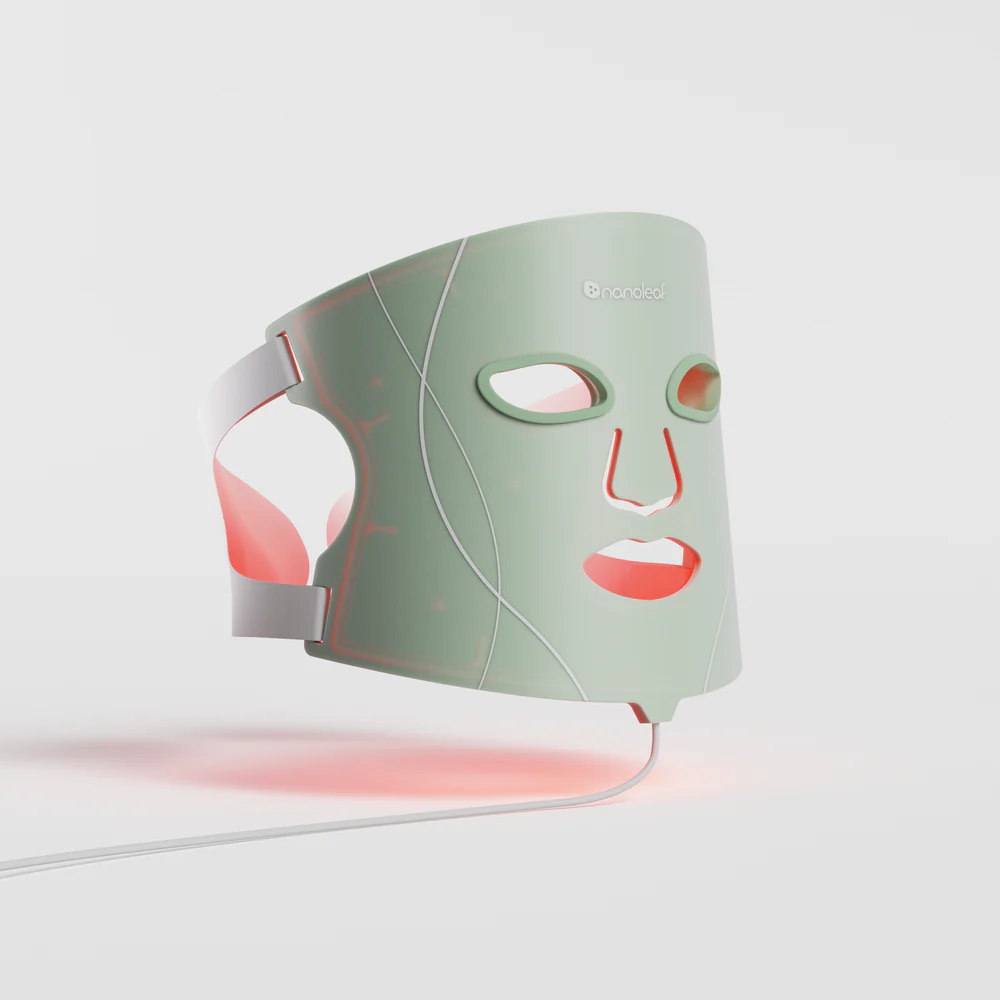
Nanoleaf positioned this as an accessible, FDA-cleared at-home alternative to clinical light therapy sessions. Made from medical-grade silicone, the mask weighs 258g – lighter than most competing hard-shell designs – and features 108 four-wick LED bulbs totaling 432 LEDs that cover the full face. A detachable controller handles power, mode selection, and a timer that runs up to 30 minutes, with a built-in rechargeable battery that requires no wall outlet during sessions.
The seven light therapy modes are: red (anti-aging and fine lines), blue (acne), green (dark spots), yellow (inflammation), cyan (irritation), purple (texture), and white (overall rejuvenation). Every mode runs paired with near-infrared light (NIR), which Nanoleaf says enhances cellular energy production and improves circulation in deeper skin layers. The recommended protocol is 5-10 minutes per session, three to five times per week, with visible improvement expected around the 4-6 week mark and full results by week 8-10.
Who It Targets
This mask is clearly aimed at people curious about LED light therapy who are not ready to drop $400-plus on a premium device. It also appeals strongly to skincare enthusiasts who travel regularly, because the detachable controller means the silicone portion can go in a carry-on without bending or cracking. The no-app design is explicitly marketed as a feature – you do not need your phone to run a session, which a surprising number of real users across reviews and forums flagged as a welcome change from the subscription-hungry wellness gadget norm.
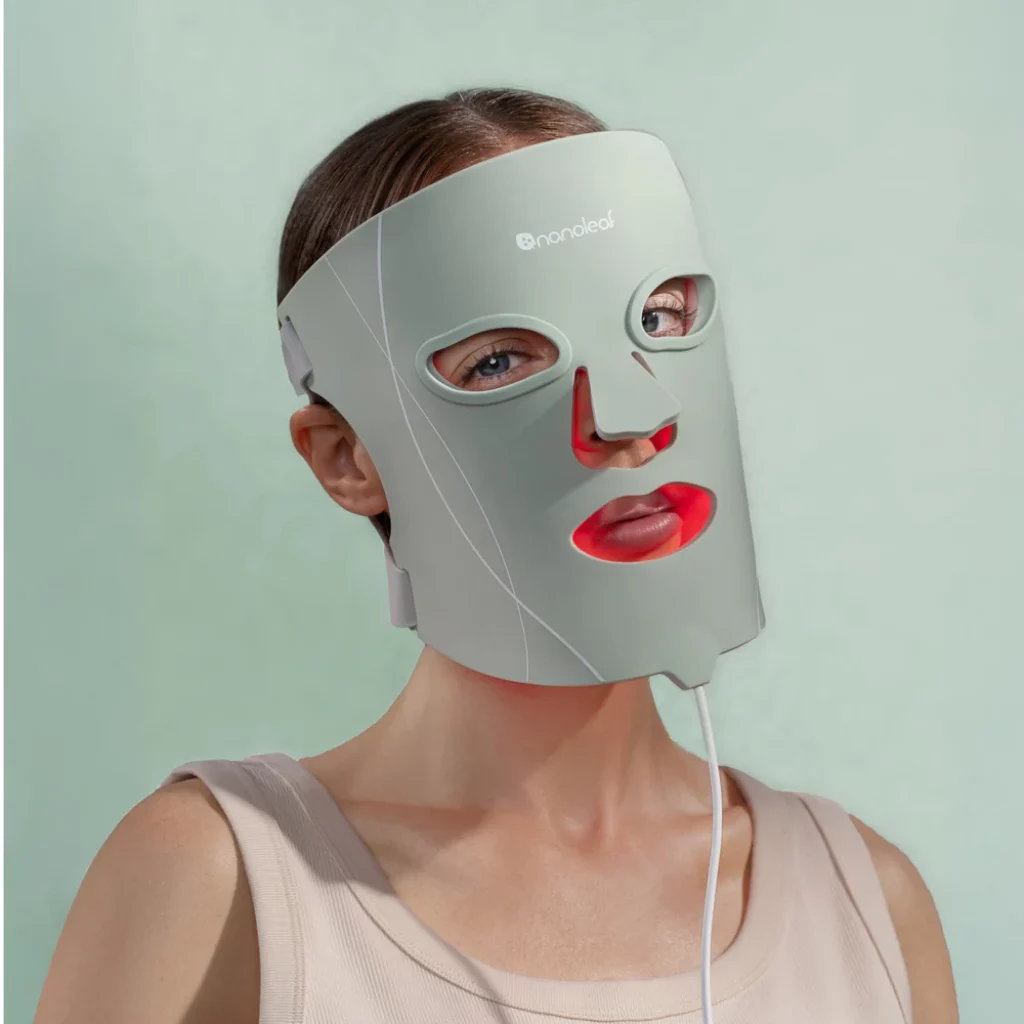
Photo: Nanoleaf
Features and How They Hold Up
LED Quality and Therapeutic Dosing
This is where Nanoleaf’s background actually shows. Reviewers who measure light therapy masks against clinical benchmarks found the Nanoleaf’s energy output sits right in the middle of the therapeutic sweet spot – delivering approximately 6.5 joules per cm² in a standard 10-minute session, which is considered optimal for skin and beauty benefits. That is not a given at this price point. Many cheaper masks either underdose, barely triggering any cellular response, or overdose without adequate controls.
The LED density is also genuinely strong for the category. 432 high-intensity LEDs provide full-face coverage and maintain close skin contact throughout a session, which matters because light energy drops off quickly with distance from the skin. The flexible silicone helps here – it conforms to facial contours far better than rigid plastic shells, keeping LEDs consistently closer to the surface.
The Wavelength Nuance No One on the Marketing Page Will Tell You
Here is where being straight with you matters. There are specific color wavelengths that clinical research has identified as most beneficial in skincare – primarily blue at 415nm, red at 633nm, and NIR at 830nm. The Nanoleaf mask hits close to these targets but falls just outside the peak performance range across all three. That does not make them ineffective. It means you are working adjacent to the clinical gold standard rather than directly on it, which is typical of most sub-$300 devices and not a reason to walk away.
More importantly, the yellow, cyan, purple, and white modes lack robust clinical evidence for their claimed benefits. The purple mode in particular is simply a combination of red and blue LEDs rather than a dedicated wavelength diode – which is standard practice at this price, but worth knowing before you build a routine around it. The mask carries FDA clearance, which speaks to safety, not efficacy. Real users reporting results tend to cluster around red and blue light. The more exotic modes are worth experimenting with but should not drive your purchase decision.
Design and Portability
The detachable controller is one of the more thoughtful design choices in this category. The silicone mask portion folds flat into a carry-on without risk of cracking, while the battery housing packs separately. For anyone who has traveled with a hard-shell LED mask and spent ten minutes trying to fit it into a bag without damaging it, this matters.
The controller itself is deliberately simple – three buttons (power, mode, timer), a small screen, and a USB charging cable. The manual does a clear job of explaining what each mode targets. One limitation worth flagging: you cannot run any mode without near-infrared running simultaneously. If you have specific reasons to want NIR-free sessions, this mask does not accommodate that. The small controller screen can also make cycling through modes slightly fiddly in the early sessions, though most users report it becomes second nature quickly.
Battery life runs around three hours total – roughly 15 ten-minute sessions per charge, with a recharge time of just over an hour. Users across multiple review platforms describe this as more than sufficient for typical weekly routines.
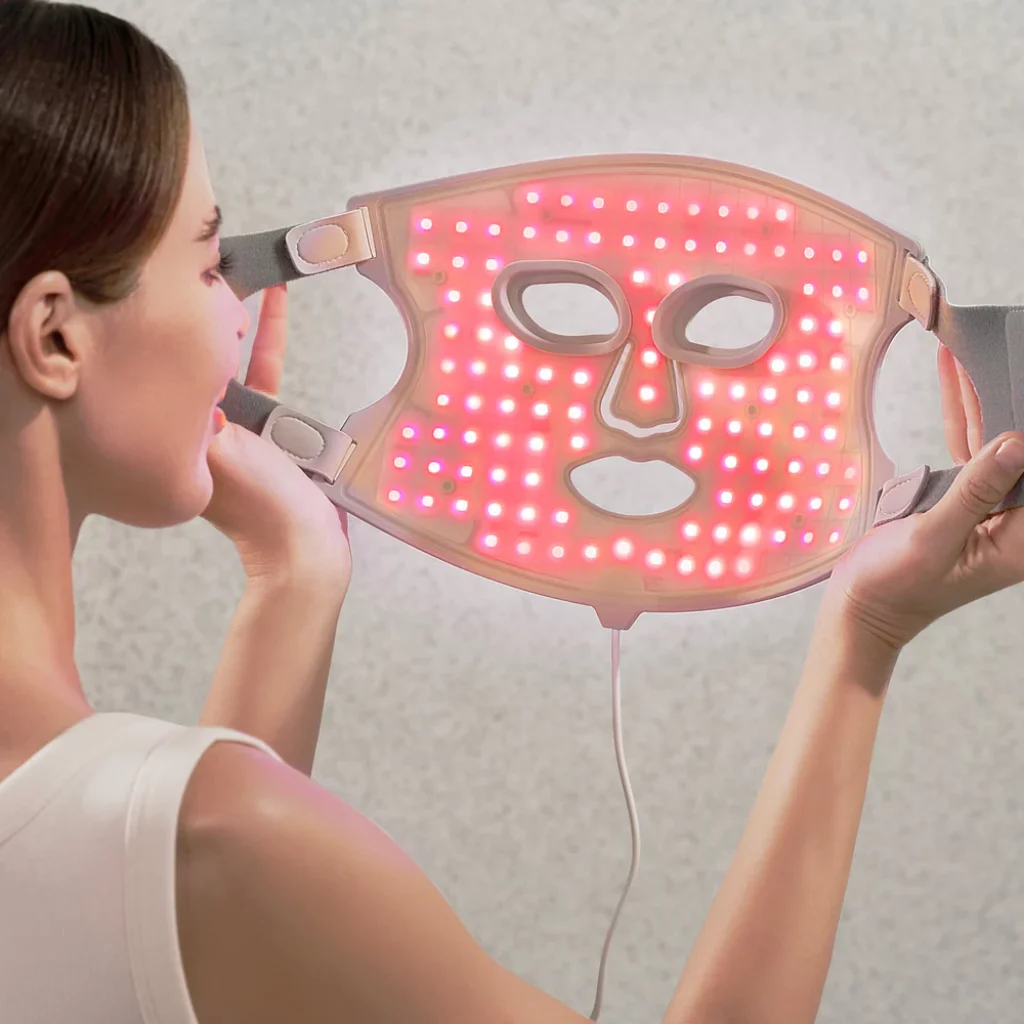
Photo: Nanoleaf
The Comfort Problem
This is the topic that shows up across almost every independent review, forum comment, and product page discussion. The Nanoleaf mask fits some faces well and others noticeably poorly, and it is worth addressing directly rather than burying in a pros and cons list.
The eye holes run narrow, the mouth cutout sits lower than ideal on many faces, and the velcro straps can slip on shorter or finer hair. Multiple independent reviewers noted the mask appears calibrated for a longer, larger face shape. Getting the eye cutouts aligned correctly often means the mouth opening sits too far down toward the chin, and this misalignment becomes more pronounced when using the included protective eye inserts – because inserting them shifts the whole fit and makes strap re-adjustment harder.
The silicone also builds up warmth during sessions. Some users describe this as pleasant and relaxing. Others, particularly those testing during warmer months, found it genuinely uncomfortable. A recurring comment across product reviews involves the velcro straps specifically – they can be quite difficult to pull apart cleanly after a session, and one user described skipping them entirely by simply lying down during treatment. That workaround is effective but it is also a design issue Nanoleaf could address in a future version.
To be clear: this is not a universal dealbreaker. A meaningful number of users – including people who tested it alongside partners with different face shapes – reported no significant fit problems and found the mask comfortable for full sessions. Individual face geometry varies enormously. But the pattern in the feedback is consistent enough to take seriously, and smaller or more petite faces are the ones most likely to hit problems.
Pricing and Value
The list price is $249.99 USD, though the US price has fluctuated and was previously sitting around $199.99 before recent tariff adjustments pushed it back up. UK pricing is £129.99, which makes the UK comparatively a significantly better deal on a per-feature basis. The mask is available directly from Nanoleaf and through major third-party retailers.
The purchase comes with a 2-year warranty and a 30-day trial period. Returns carry a $5 restocking fee – not punitive, but worth knowing if you are on the fence. What’s in the box is fairly minimal: eye socket cushions, the rechargeable controller, and velcro straps. No storage pouch is included, which multiple users across forums and review sites flagged as a nagging omission at this price. It is a small thing that would have added meaningfully to the perceived value.
At $199.99, the Nanoleaf’s value case is strong relative to competing masks in the same tier. Specialist reviewers who score masks across objective criteria – LED density, wavelength coverage, dosing accuracy, coverage consistency – have rated the Nanoleaf at the top of its class among sub-$300 devices. At $249.99, the comparison to premium options tightens and the decision becomes more personal. If you can find it at the lower historical price, the recommendation is easier.

Photo: Nanoleaf
Real-World Experience Patterns
Across independent testing, specialist review sites, user-submitted product reviews, and beauty tech forum discussions, certain patterns repeat clearly enough to be worth surfacing.
Where it consistently works: Inflammation reduction and fine line improvement through red light therapy show up most reliably. Testers who ran consistent four-week red light cycles at three to four sessions per week reported small but real improvements to fine lines and surface skin texture. This aligns with the clinical evidence base, which is strongest for red and NIR light combinations in the 600-900nm range. Users who stuck with the protocol long enough generally saw something.
Where results are genuinely variable: Blue light for acne shows more mixed outcomes than red light for aging. Some users, especially those dealing with surface-level breakouts, report faster clearing of small blemishes. Others see little change. This likely reflects individual skin response variation more than a flaw in the device, but it means you should go in with calibrated expectations rather than assuming blue light will work as consistently as red.
Unexpected use cases: Several real users described taking the flexible silicone mask entirely off their face and using it on knees, elbows, and other joints. The pliability that makes it travel-friendly also makes it practical for off-face body applications – and users specifically mentioned yellow light’s anti-inflammation effects translating well to bruising and joint soreness. Nanoleaf designed this for facial use, but the form factor happens to enable more than that.
Who Should Buy the Nanoleaf LED Light Therapy Face Mask
This mask earns its place in a few specific scenarios. It is a strong pick if you are new to LED light therapy and want to start without spending $400-plus. It is genuinely useful as a travel-friendly device, whether as your primary mask or as a portable backup to a more powerful home unit. People with larger or longer face shapes will likely find the fit comfortable without much adjustment.
The no-app, no-subscription setup also appeals strongly to a particular kind of buyer. People who want to put on a mask, press one button, and sit quietly for ten minutes without pairing Bluetooth or logging into an account are the natural audience here. That group is larger than the wellness tech industry tends to acknowledge.
Who Should Look Elsewhere
If you have a smaller face, narrower eye spacing, or more petite features, the fit issues are real enough that you should either try the mask in person before buying or go in prepared for a trial-and-error setup period. The mask proportions genuinely favor larger face shapes and this is not just a minor inconvenience – for some users it means the therapeutic coverage is less effective because the LEDs are not landing where they should.
If acne is your primary concern rather than anti-aging, the evidence base for this mask’s blue light performance is thinner and more variable than for red light. You may see good results, but you are taking more of a chance than with red light therapy. And if you want the most precisely calibrated wavelengths and the best available fit for therapeutic outcomes, something like Therabody’s TheraFace Mask is the upgrade path – more expensive, bulkier, but more customizable and more comfortable for extended use.
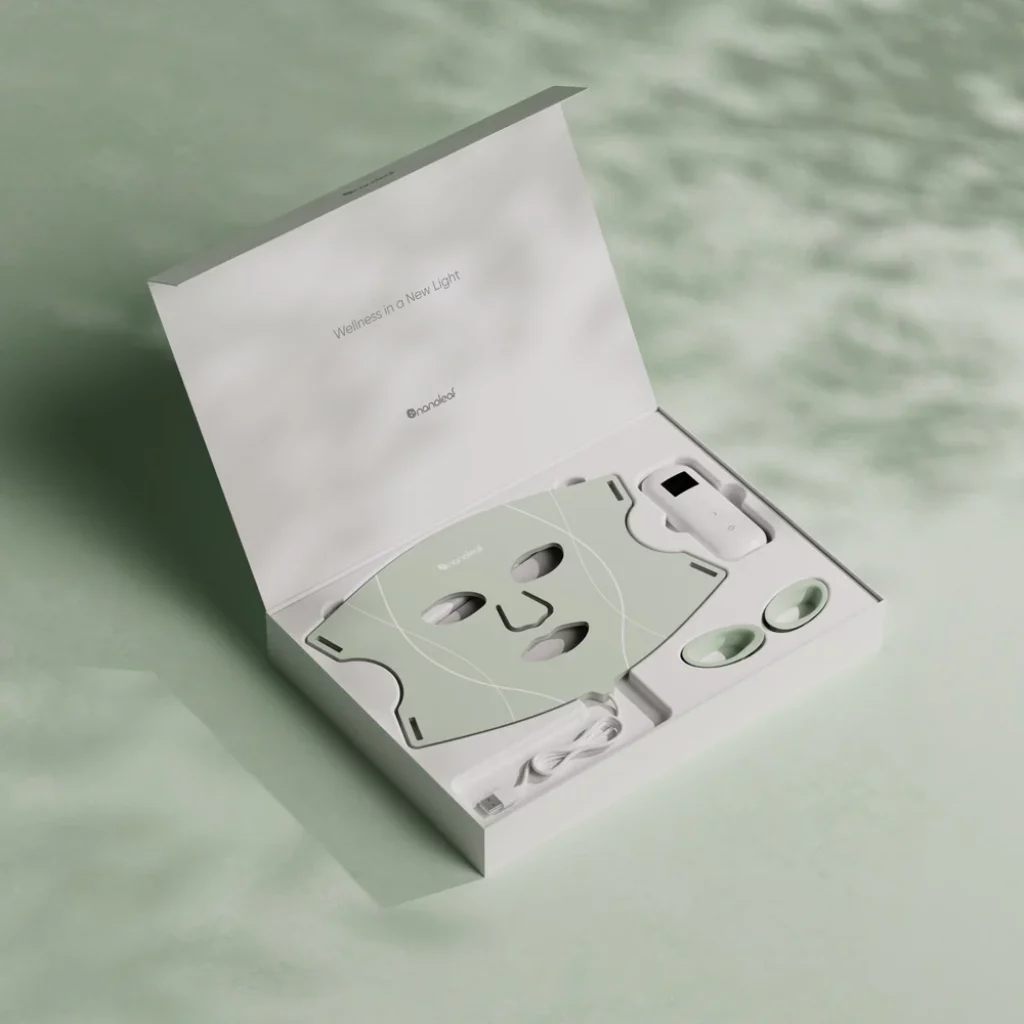
Photo: Nanoleaf
Bottom Line
The Nanoleaf LED Light Therapy Face Mask is a more capable device than its brand origin suggests. A smart home lighting company entering beauty tech is the kind of move that usually ends with a product that looks good and does little. Instead, Nanoleaf’s LED expertise turns out to be directly relevant – the dosing is clinical-grade, the LED density is strong for the price, and the portable design solves a real problem that rigid competing masks do not. The comfort and fit issues are genuine and will be dealbreakers for some buyers, but for a first-generation product in a category the company has no prior history in, this is a confident and well-executed debut.
The clearest takeaway is that red and NIR light are doing the real work here – and that is fine, because those are the modes with the strongest clinical backing anyway. The other five modes are worth exploring but should be treated as supplementary. If you are willing to give it 8-10 consistent weeks with red light therapy as your primary focus, the evidence from multiple independent testers suggests you will see incremental but real improvement. Incremental is how light therapy works, and being honest about that is part of recommending this product responsibly.
Which raises a fair question for anyone considering this purchase: are you actually the kind of person who sticks with a skincare routine for ten weeks – or will this join the collection of well-intentioned devices gathering dust by week four?
FAQ
Does the Nanoleaf LED Light Therapy Face Mask actually work?
Results depend heavily on which mode you use and how consistently you apply the protocol. Red and blue light modes have the strongest clinical backing, and users who stuck with red light for 4-8 weeks consistently reported gradual improvements in fine lines, skin texture, and inflammation. Do not expect dramatic changes – LED light therapy is a slow-build protocol that rewards consistency, not a quick fix.
How long does the battery last on the Nanoleaf face mask?
The built-in battery lasts approximately three hours of total use, which works out to around 15 ten-minute sessions on a full charge. Recharging takes just over an hour. Most users find this more than sufficient for weekly use over two or more weeks before needing to plug in.
Is the Nanoleaf LED face mask worth the price?
At $199.99, the value case is strong relative to competing masks in the same tier. At the current $249.99 US list price, it becomes a closer comparison to premium options and the decision depends more on your priorities. UK buyers at £129.99 are getting a notably better deal. The 2-year warranty and 30-day trial provide reasonable reassurance either way.
How does the Nanoleaf face mask compare to more expensive options like Therabody?
The Therabody TheraFace costs significantly more and offers a more comfortable fit, greater wavelength customization, and additional features like vibration therapy. The Nanoleaf is lighter, more portable, and considerably cheaper. For most beginners, the Nanoleaf is the better starting point. For people who have already committed to light therapy long-term and want the best available precision and fit, Therabody is the logical upgrade.
What are the most common complaints about the Nanoleaf face mask?
Fit is the top recurring issue – the mask sits better on longer or larger face shapes, and the eye and mouth openings can misalign on smaller faces. The velcro straps can be difficult to detach cleanly after use and tend to slip on finer or shorter hair. Some users find the silicone builds up heat uncomfortably during sessions. None of these are universal complaints, but they appear consistently enough across user feedback to take seriously before buying.
Can I use the Nanoleaf LED mask on body parts other than my face?
Yes, and a number of users do exactly this. The flexible silicone design lets the mask conform to knees, elbows, and other joints, and real users have described using yellow light for bruising and localized inflammation with positive results. The mask was designed for the face, but its pliability makes off-label body use practical and several buyers treat this as a genuine added benefit.
Do I need an app to use the Nanoleaf face mask?
No – this mask has no app and requires no phone pairing whatsoever. Everything is controlled via the attached handheld controller with three buttons. This is a deliberate design choice, and many users specifically cite it as a plus. The controller’s small screen can be slightly fiddly to navigate at first, but the interface is simple enough that most people have it memorized after two or three sessions.
Is the Nanoleaf LED face mask FDA-cleared?
Yes, but it is worth understanding what that means. FDA clearance for a Class II device confirms the product meets safety standards – it does not constitute formal approval for specific efficacy claims. The mask has been cleared as safe to use, not certified as a proven treatment for any particular skin condition.
How long before I see results from the Nanoleaf face mask?
Nanoleaf’s own guidelines suggest visible improvements in texture and tone by weeks 4-6, with full benefits around weeks 8-10. Independent users who followed consistent protocols reported noticing meaningful improvements in fine lines and skin texture after roughly four weeks of regular use. Results vary by skin type, and there is a real subset of users – particularly those using blue light for acne – who see limited change. Consistency with the protocol matters more than any single session.