Updated on May 30, 2026
TLDR
Verdict: NextSense Smartbuds are the most technologically ambitious sleep earbuds on the market – but first-generation friction means they’re best suited to patient early adopters, not everyone chasing better sleep.
- What it is: EEG-powered wireless earbuds that monitor brainwaves in real time to detect sleep stages and actively deepen slow-wave sleep via timed audio pulses
- Who it’s for: Back sleepers, biohackers, and sleep-curious iPhone users willing to pay a premium for genuine brain data
- Top strengths: Clinical-grade EEG in a consumer form factor, effective noise masking, smart alarm, strong scientific advisory team
- Biggest limitation: Side sleepers report significant comfort issues, and the device is iPhone-only with a mandatory monthly subscription on top of a premium hardware price
- Quick verdict: Genuinely innovative technology, real caveats in daily use – worth it for the right person, premature for most
Jump to:
- TLDR
- Why This Review Exists Right Now
- What NextSense Smartbuds Actually Are
- The EEG Technology: How Legit Is It?
- Key Features, Honestly Assessed
- The Comfort Question – And Why It Matters So Much
- NextSense Smartbuds Pricing and the Subscription Model
- Who Should Buy NextSense Smartbuds
- Bottom Line
- FAQ
- Are NextSense Smartbuds worth the price?
- Do NextSense Smartbuds actually improve deep sleep?
- Are NextSense Smartbuds comfortable for side sleepers?
- Do NextSense Smartbuds require a subscription?
- Are NextSense Smartbuds compatible with Android?
- How does NextSense Smartbuds EEG compare to Muse or other EEG sleep devices?
- Is the NextSense brain data private?
- What happens if I cancel my Fit Kit subscription?
Why This Review Exists Right Now
Sleep trackers have been lying to you. Your Fitbit doesn’t know what stage of sleep you’re in – it’s making an educated guess based on movement and heart rate. That gap between “tracked” and “understood” is exactly what NextSense Smartbuds claims to close, using the same EEG brainwave technology that sleep clinics have relied on for decades.
The problem is that EEG equipment has historically cost thousands of dollars and required a technician to apply conductive gel to your scalp. NextSense’s pitch is audacious: six clinical-grade EEG sensors, packed into a 5-gram earbud that looks like something you’d wear on your commute. That’s not a modest claim. It’s a category-defining one – and it deserves a hard look before you spend $299 (or more) on it.
This review synthesizes hands-on experiences from multiple independent testers across tech publications, travel writers, and sleep specialists, plus the clinical background and business realities that shape what you’re actually buying.
What NextSense Smartbuds Actually Are
NextSense is a Mountain View-based neurotechnology company that spun out of Google X – yes, the moonshot division. Founder and CEO Jonathan Berent spent a decade in Google’s orbit before deciding the brain was the next frontier in consumer health. He lectures on Sleep Hacking at Stanford and UCSF, and the company’s scientific advisory board reads like a who’s-who of sleep and neuroscience: David Eagleman of Stanford, Ken Paller of Northwestern, Rafael Pelayo from Stanford’s Sleep Medicine division, and multiple professors from Emory, UC San Diego, and the Icahn School of Medicine. That’s not decorative. It signals serious intellectual infrastructure behind what could otherwise look like a wellness gadget.
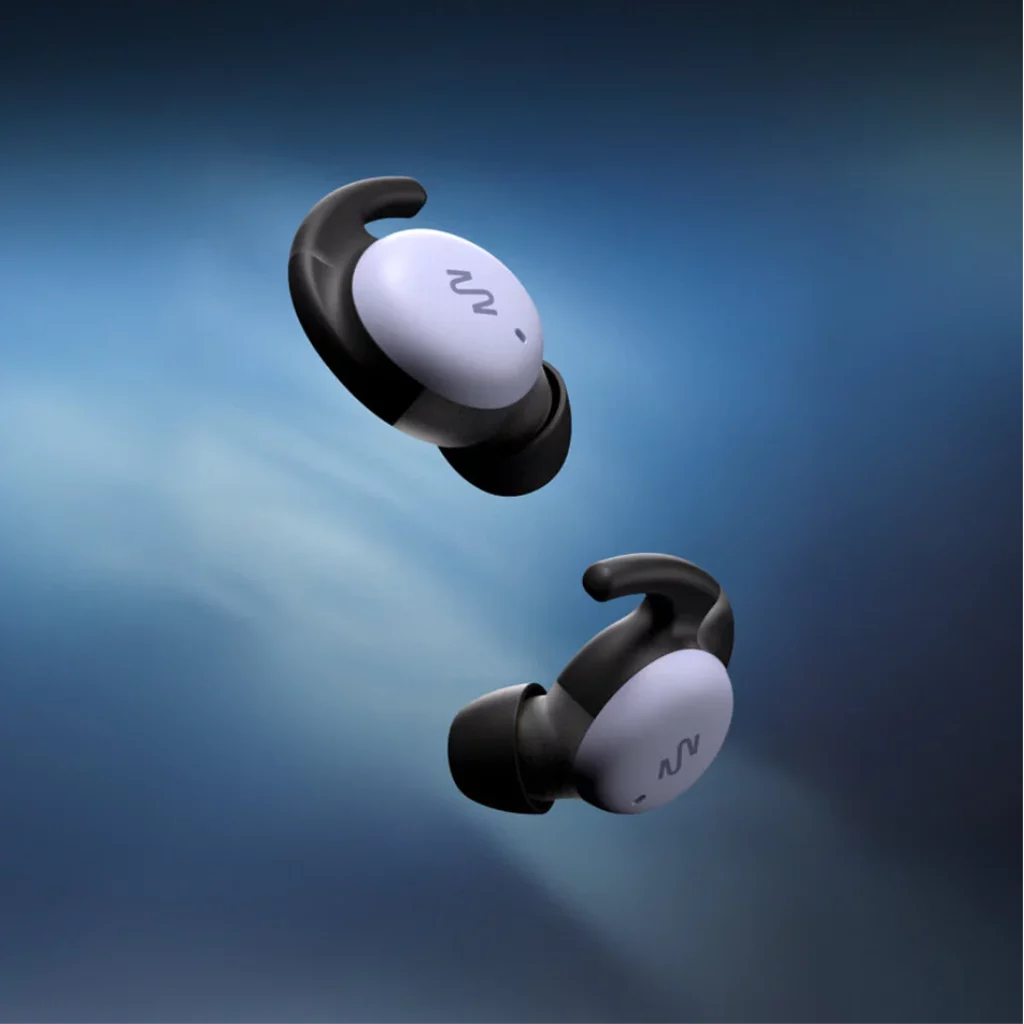
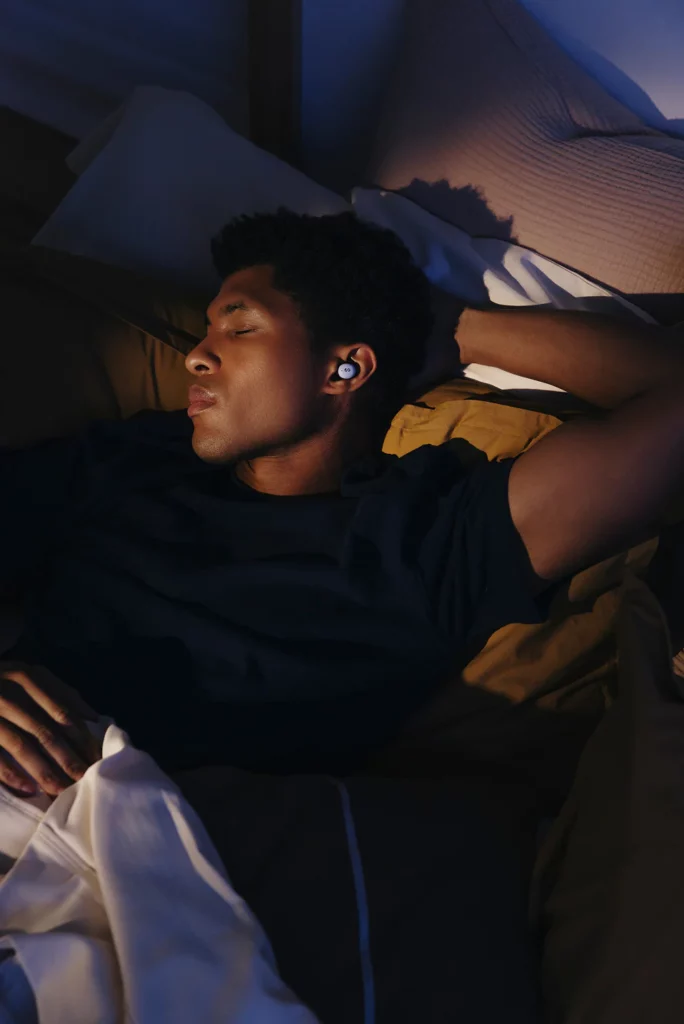
The Smartbuds debuted at CES 2025 under the “Tone by NextSense” brand and launched commercially in early 2026, backed by a $16 million Series A led by Ascension Ventures. The product itself is straightforward to describe and genuinely novel in execution: earbuds with dry-contact EEG sensors built into the ear tips and silicone wings that press against the ear canal walls. As you sleep, those sensors continuously read electrical activity from your brain, and the companion app – currently iOS only – classifies you in real time into light sleep, deep sleep, REM, and wakefulness. When the app detects you entering slow-wave sleep, it plays precisely timed pink noise pulses designed to nudge and sustain those brain wave patterns.
The key distinction from every other consumer sleep tracker is right there: it’s not just watching what you do – it’s trying to change it, while you’re still asleep.
The EEG Technology: How Legit Is It?
Clinical Science, Consumer Packaging
In-ear EEG is not science fiction. Research has established that the ear canal – thin skin, close proximity to the temporal lobe, relatively low electrical noise – is a viable site for neural signal capture. NextSense published validation data suggesting their sleep staging correlates meaningfully with polysomnography, the gold-standard clinical sleep study. More impressive is an independent multi-site study in which NextSense ear-EEG captured 86.4% of focal seizures detected by traditional clinical equipment across 1,255 hours of simultaneous recording. That’s not a company cherry-picking its own data – it’s peer-reviewed validation of the underlying technology.
The six dry-contact EEG sensors sample at 1,000 Hz, which matches or exceeds what you’d expect in a clinical setting. That sampling rate matters because the slow-wave enhancement feature depends on detecting sleep stage transitions quickly enough to act on them. NextSense claims millisecond detection latency – the hardware appears built to support that.
What Real Users Notice
Independent reviewers who tested the device over multiple weeks found the sleep stage detection broadly credible, but not consistently precise. The smart alarm feature – which targets lighter sleep stages within a user-defined window to produce a less groggy wake-up – worked noticeably well on many nights and missed the mark on others. Across multiple published reviews, testers found the device genuinely impressive in aggregate, while acknowledging that individual nights produced data that didn’t always match what they’d experienced.
The honest framing from experienced sleep tech writers is this: in-ear EEG is meaningfully more accurate than wrist-based inference, but it still isn’t the same as sleeping in a sleep lab. NextSense is the best available consumer approximation, not a clinical replacement.

Key Features, Honestly Assessed
Noise Masking and Audio Library
Here’s where the Smartbuds reliably impress. Across virtually every review, the noise blocking – combined with a thoughtfully curated soundscape library – performs well in real-world conditions. One reviewer at a luxury travel publication tested them against penguin calls at an Australian destination, screaming babies on long-haul flights, and hotel hallway noise. The Smartbuds handled all of it better than the alternatives they’d used. Another reviewer who tested across multiple hotel stays reported sleeping through sounds that consistently disturbed her husband, who wasn’t wearing them.
The soundscape library is organized into categories including weather and water, binaural beats, ambient compositions, and “noises of all colors” – white, pink, brown, and blue. There’s also an enhanced sound masking mode that layers on top of any soundscape to target snoring and room noise specifically. Users frequently single out the audio quality as a genuine strength – these aren’t tinny sleep earbuds, they’re buds with a 6mm dynamic driver that happens to also read your brain.
Slow-Wave Enhancement
This is the core technological differentiator. When the EEG detects you’re in slow-wave (deep) sleep, the Smartbuds deliver pink noise pulses timed to synchronize with your brain’s natural delta wave rhythm. The idea – validated in academic research, including work by Ken Paller at Northwestern, a NextSense scientific advisor – is that precisely timed auditory stimulation can deepen and extend those slow waves without waking you.
Beta users reportedly saw measurable increases in deep sleep within their first week. NextSense cites an average increase in slow-wave activity across 106 controlled beta nights. These numbers come from the company’s own data, so treat them with appropriate skepticism – but the underlying mechanism is scientifically established, not invented.
Smart Alarm
The app lets you set a wake window rather than a hard alarm time. The Smartbuds monitor your sleep stage in real time and wake you during lighter sleep within that window. Multiple testers described noticeably different wake experiences on nights when it worked correctly – a gradual, less jarring emergence rather than the mid-cycle jolt most people are used to. On nights when the staging felt inaccurate, the benefit disappeared.
Focus and Meditation Modes
NextSense has expanded the Smartbuds beyond sleep. The Focus mode uses EEG to detect when you’re in a productive cognitive state versus drifting, and adjusts audio to keep you on track. Meditation mode provides real-time feedback as your mind settles, adjusting soundscapes accordingly. These modes are newer additions and have received less user scrutiny than the sleep features – they work on the same EEG architecture, so the technology is sound, but the experience data is thinner.
The Comfort Question – And Why It Matters So Much
If there’s one thing that separates people who love these earbuds from people who don’t, it’s sleep position.
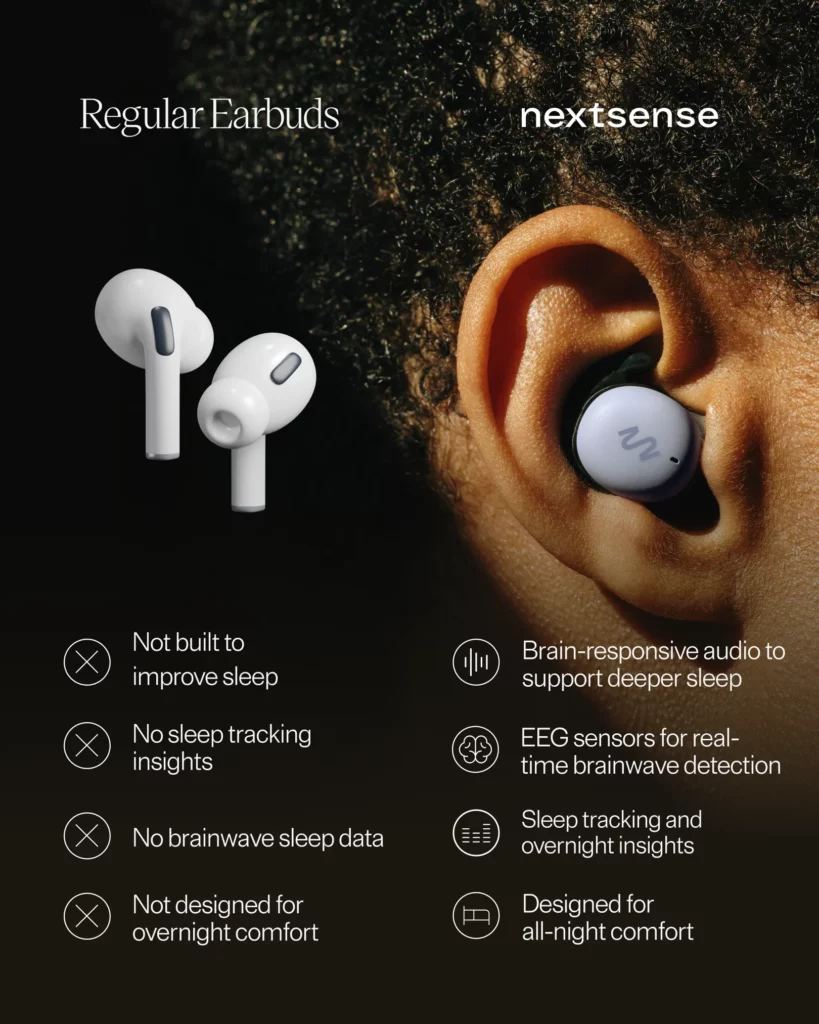
Back sleepers and combination sleepers who spend at least part of the night on their backs have broadly reported comfortable overnight wear, particularly once they find the right tip and wing size. The product ships with three sizes, and the app includes a fit guide and a signal quality checker that tells you whether the sensors are making adequate contact. Reviewers who found the right fit – typically after one to three nights of experimentation – reported the Smartbuds became unobtrusive enough to stop thinking about.
Side sleepers face a harder reality. Multiple reviewers explicitly flag this as a genuine usability concern, not a minor caveat. The earbuds add enough bulk that sleeping directly on your ear creates pressure, which can mean sore ears by morning and interrupted sleep. One tech reviewer with years of sleep gadget testing experience described this as the product’s most significant practical limitation – and the one most likely to end the relationship for a large portion of potential buyers.
The fit is also non-trivial to get right in the first place. Two common failure modes reported across reviews: using the wrong tip size (leading to sore ears and poor signal quality) and not seating the wings correctly (leading to data gaps). NextSense addresses this with guided setup, but there’s still a learning curve. This is the reality of medical-grade hardware in a consumer wrapper.
NextSense Smartbuds Pricing and the Subscription Model
The pricing structure requires careful reading, because it’s more layered than it first appears.
The Smartbuds retail at $399.99, though NextSense has offered them at $249 as a launch price. Either way, this puts them at the premium end of sleep tech – above most passive trackers, roughly comparable to mid-tier smart mattress accessories. That’s defensible for a clinical EEG device if the technology delivers. The more contentious element is the ongoing cost.
Maintaining clinical-grade EEG signal quality requires fresh ear tips and conductive wings – the elements that make electrical contact with your skin. NextSense sells these through a Fit Kit subscription at $14.99 per month, after three months included free with purchase. That’s roughly $180 per year on top of the hardware. The company frames this as a hygiene service and signal quality necessity rather than a paywall on features – and there’s a legitimate argument there, since worn-out silicone reduces sensor accuracy. But it’s still a recurring cost that makes direct price comparisons with Oura Ring, Whoop, and similar devices more favorable to competitors.
The subscription can be paused or cancelled, and NextSense notes you can buy replacement tips and wings separately. But stopping the replacement cycle will, by the company’s own admission, compromise EEG accuracy. It’s a soft dependency, but a dependency nonetheless.
Partial offset: the Smartbuds are eligible for HSA/FSA payment, which meaningfully reduces the effective cost for users with health savings accounts. And the 30-night trial with full refund removes the biggest financial risk of trying them.
Who Should Buy NextSense Smartbuds
The NextSense Smartbuds make the most sense for someone who:
Primarily sleeps on their back or can tolerate in-ear devices through the night. This is the non-negotiable practical filter – side sleepers who give up on comfort will also give up on the sleep data that makes the product valuable.
Owns an iPhone 12 or newer running iOS 17 or later. Android users are locked out entirely. There’s no timeline for Android support, and reviewers who flagged this note it effectively cuts the addressable market by roughly half. Buying into Smartbuds is buying into an Apple-exclusive ecosystem for now.
Is genuinely curious about EEG-level sleep data, not just a score. Users who want a number to track trend over time may find the Smartbuds’ richer data more overwhelming than useful. The people who get the most from them tend to be those who want to understand what’s happening in their sleep architecture, not just whether it was “good” or “bad.”
Is comfortable with first-generation hardware. Multiple independent testers characterized the current Smartbuds as a genuine early product – impressive technology, app still maturing, occasional accuracy gaps. Reviewers who approached it as a tech enthusiast and early adopter came away more satisfied than those who expected plug-and-play perfection.
Who Should Look Elsewhere
Committed side sleepers, Android users, and anyone who finds earplugs uncomfortable should look at alternatives. The Muse S Gen 2 headband offers EEG-based sleep tracking in a format that doesn’t press against the ear, though it comes with its own comfort limitations. Standard sleep earbuds from brands like Soundcore handle noise masking without the EEG overhead at a fraction of the price. And for passive sleep tracking, the Oura Ring 4 remains the most accurate non-EEG consumer option with a lower hardware cost and a simpler subscription model.
Bottom Line
NextSense Smartbuds are a legitimate technological breakthrough poorly disguised as a consumer product. The EEG hardware is real, the science behind slow-wave enhancement is published and peer-reviewed, and the scientific advisory team is credible enough to mean something. When the fit is right, the sleep position isn’t a problem, and the app’s staging is accurate, reviewers consistently report a noticeably different sleep experience – less groggy mornings, more insight into what their brain is doing at night. That’s genuinely novel.
But “when everything works” is doing a lot of heavy lifting there. The iPhone-only limitation is a hard stop for half the market. The side sleeper problem is real and underplayed in the company’s marketing. The subscription model asks you to commit to recurring costs on top of premium hardware pricing. And the app, still maturing, doesn’t always deliver staging accuracy you can fully trust. NextSense is selling a first-generation product at a final-generation price, and whether that’s worth it depends almost entirely on which column your particular situation falls in.
So here’s the question worth sitting with: are you buying a sleep product, or are you buying a window into your own brain? If it’s the latter, and you’ve already got the right phone and sleep position, NextSense Smartbuds might be the most interesting piece of health technology you can own right now. What would you actually do with real-time EEG data about your own sleep?
FAQ
Are NextSense Smartbuds worth the price?
That depends heavily on your baseline. At the early-bird price of $249 plus $180/year in subscriptions, you’re committing real money to first-generation technology. If you’re a back-sleeping iPhone user who’s tried everything else and still wants better sleep quality, the value case is reasonable. If you’re a side sleeper or Android user, the value case essentially collapses before you get to the EEG features.
Do NextSense Smartbuds actually improve deep sleep?
NextSense’s own beta data and the underlying published neuroscience both suggest yes, when the EEG contact is good and the sleep staging is accurate. Slow-wave enhancement via precisely timed auditory stimulation is an established technique – the question is whether in-ear EEG can reliably trigger it in real-world conditions. Independent reviewers found the results promising but inconsistent compared to controlled study conditions.
Are NextSense Smartbuds comfortable for side sleepers?
This is the most commonly raised concern in published reviews. Side sleepers face meaningful discomfort due to the earbuds’ bulk pressing against the pillow. Some side sleepers report finding an acceptable fit with the right tip and wing combination, but multiple experienced testers explicitly flagged this as a genuine usability concern rather than a minor adjustment issue.
Do NextSense Smartbuds require a subscription?
Technically no – you can purchase the earbuds without committing to an ongoing subscription. But the ear tips and conductive wings need regular replacement to maintain EEG signal quality, and NextSense’s Fit Kit subscription ($14.99/month after three free months) is designed to handle that. Stopping replacement will degrade accuracy. Think of it as a soft subscription – technically optional, practically necessary.
Are NextSense Smartbuds compatible with Android?
No. At launch and as of mid-2026, Smartbuds require an iPhone 12 or newer running iOS 17 or later. There has been no announced timeline for Android support. This is a firm compatibility limitation, not a preference.
How does NextSense Smartbuds EEG compare to Muse or other EEG sleep devices?
Muse products use EEG sensors in a headband format, which avoids the side-sleeper comfort problem but introduces its own wearability issues. The in-ear EEG approach NextSense uses is newer and arguably more practical for all-night wear for back sleepers. Both approaches use real EEG data, putting them well above motion-inference trackers. NextSense’s claimed sampling rate and sensor count are clinically comparable to Muse’s hardware.
Is the NextSense brain data private?
According to NextSense’s published privacy policy, data sharing is off by default, data is encrypted and stored securely, and personal identifiers are removed before any data is used for research. The company states it never sells or shares user data, and users can delete their data from within the app at any time. Users concerned about neurological data privacy should review the full privacy policy before purchasing.
What happens if I cancel my Fit Kit subscription?
You can still use the Smartbuds, but the ear tips and wings will wear down over time and the EEG contact quality will degrade. NextSense sells replacement tips and wings individually as well, so you’re not completely locked into the subscription – but regular replacement remains necessary for accurate brainwave sensing.