Updated on April 10, 2026
TLDR
The Novilla AiryFlow is a budget-friendly, all-foam, cooling-focused mattress that delivers a classic memory-foam cradle with genuine airflow upgrades – but has real limitations worth knowing before you buy.
- What it is: All-foam, medium-firm bed-in-a-box with an Ice Silk cover, NanoGEL memory foam, and 3D breathable mesh sides; available in 10″ to 16″ profiles
- Who it’s for: Budget-conscious side and back sleepers under 230 lbs, couples prioritizing motion isolation, and hot sleepers who want better-than-average foam cooling
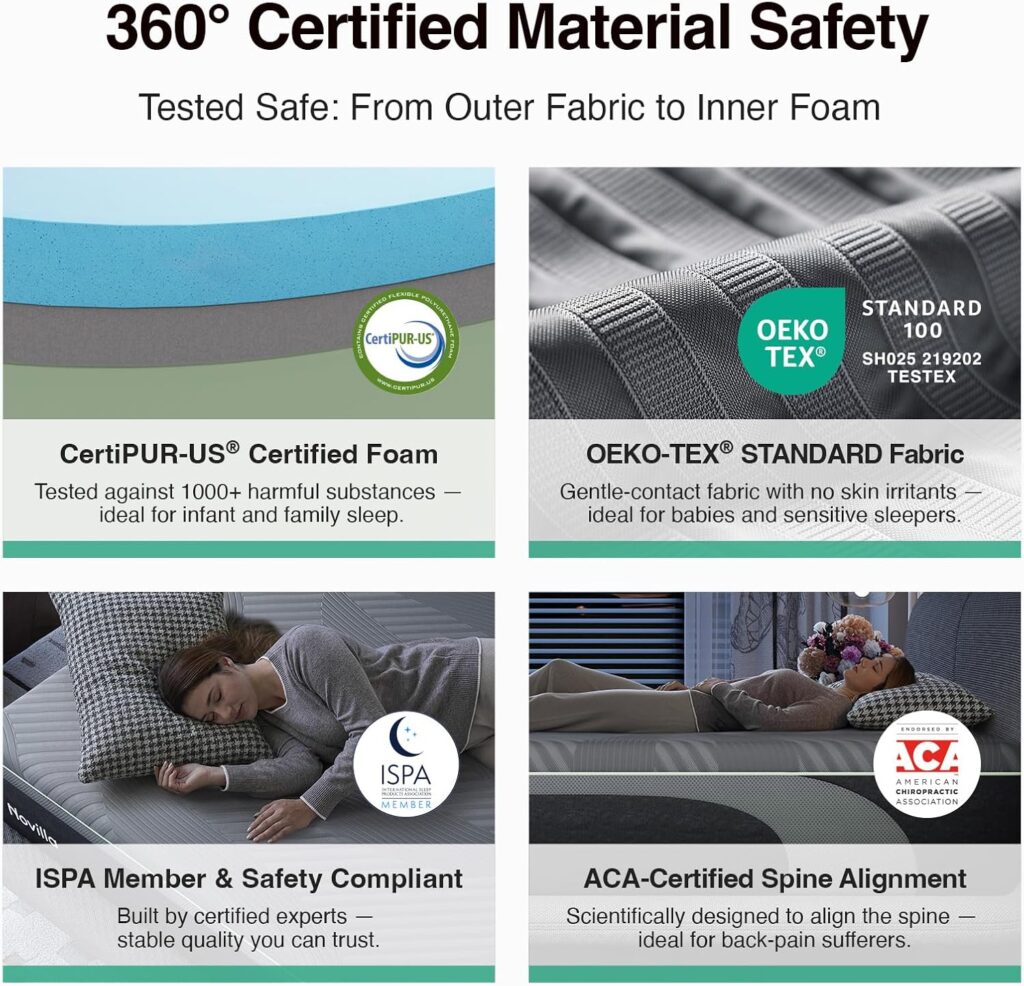
- Top strengths: Excellent motion isolation, meaningful cooling upgrades over standard foam, solid pressure relief for average-weight sleepers, CertiPUR-US and OEKO-TEX certified, 100-night trial
- Biggest limitation: Edge support is genuinely weak, and cooling – while better than most budget foam – still falls short for heavy or extreme hot sleepers
- Quick verdict: Strong value for the right buyer; treat it as a 5-7 year mattress and go in with eyes open about what “cooling foam” can and can’t do
Jump to:
- TLDR
- Introduction
- What the Novilla AiryFlow Actually Is
- The Cooling Claim: How Well Does It Actually Work?
- Motion Isolation: The AiryFlow’s Strongest Card
- Support and Pressure Relief: Good for the Right Body, Not for Everyone
- Pricing and Value: Where It Makes Sense
- Who Should Buy the Novilla AiryFlow
- Who Should Look Elsewhere
- Bottom Line
- FAQ
- Does the Novilla AiryFlow actually keep you cool?
- How long does it take for the AiryFlow to fully expand after unboxing?
- Is the Novilla AiryFlow good for back pain?
- What are the biggest complaints about the Novilla AiryFlow?
- How does the AiryFlow compare to other Novilla mattresses?
- Can heavier sleepers use the AiryFlow?
- What foundation does the Novilla AiryFlow need?
- Is the 100-night trial enough time to decide?
- Does it work on an adjustable base?
Introduction
Memory foam has had a heat problem for decades. Everyone knows it – you buy into the contouring hug, then spend half the night flipping the pillow and kicking off covers because your mattress has essentially become a slow cooker. Novilla’s pitch with the AiryFlow is simple: we’ve fixed that. NanoGEL foam, an Ice Silk cover, 3D breathable mesh sides, and what they call a 360-degree AiryFlow system. The brand claims it runs 30% cooler and 30% more breathable than standard fabrics. Bold numbers.
The question worth asking – before you spend $200-$600 depending on size – is whether any of that marketing actually holds up once a real human body is lying on it for eight hours. The answer is: somewhat yes, with important asterisks. The AiryFlow is genuinely among the cooler all-foam options in its price bracket, and it earns consistent praise from side and back sleepers in the average weight range. But independent lab testing paints a more measured picture than the product page suggests, and real-world users on longer-term ownership have flagged patterns worth taking seriously. Here’s what the evidence actually shows.
What the Novilla AiryFlow Actually Is
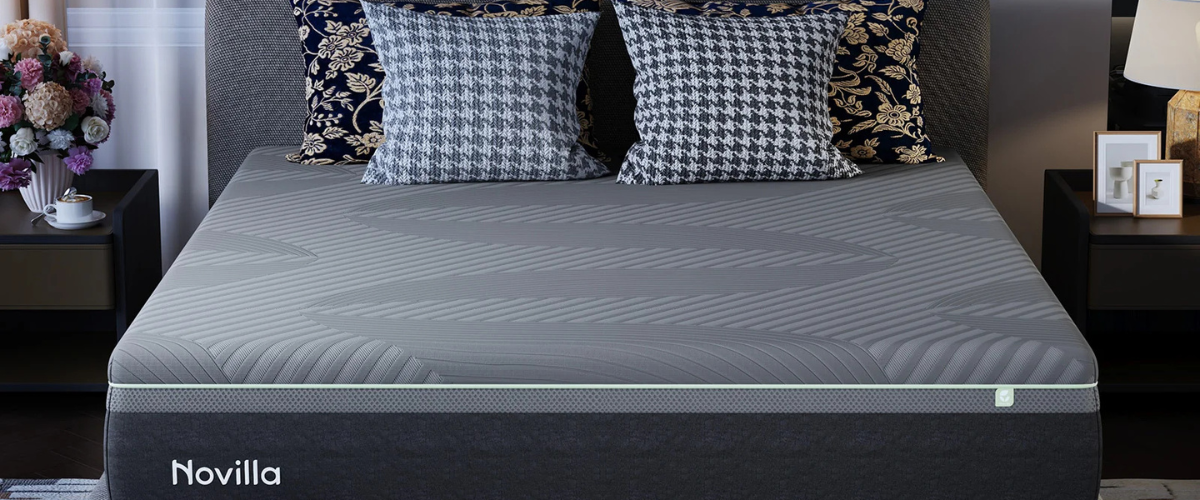
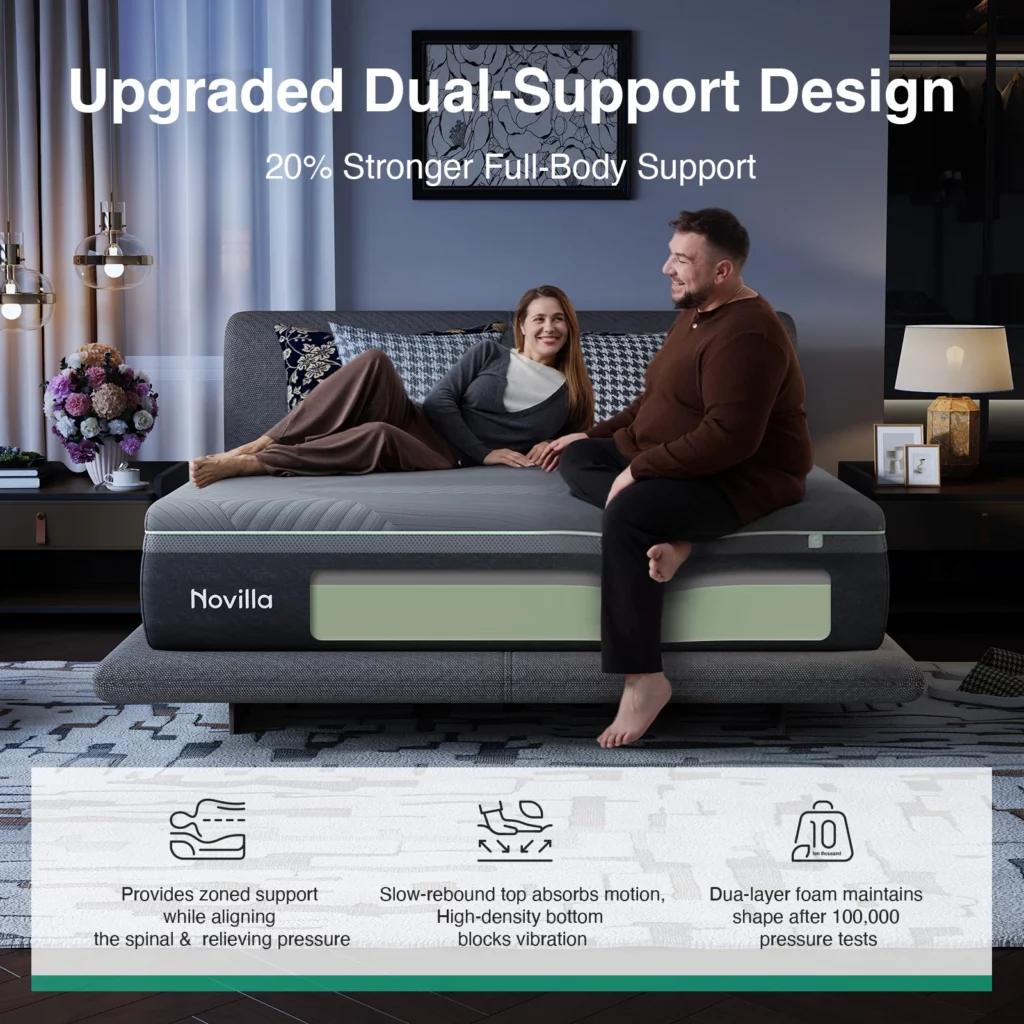
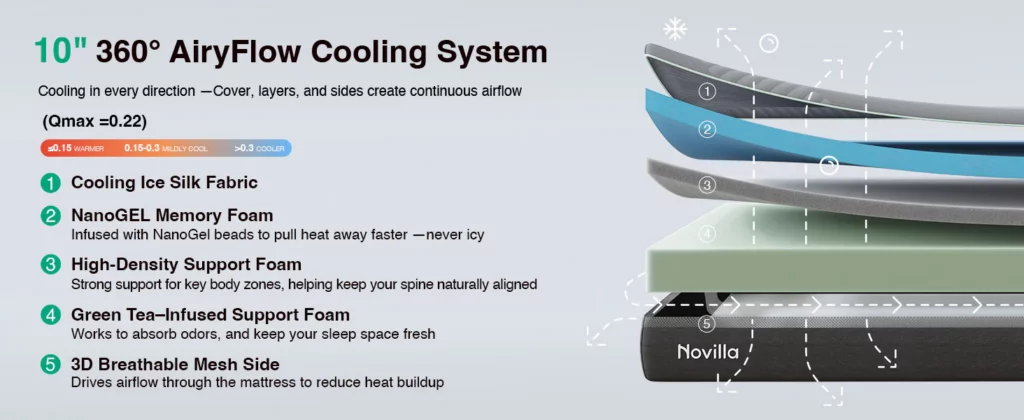
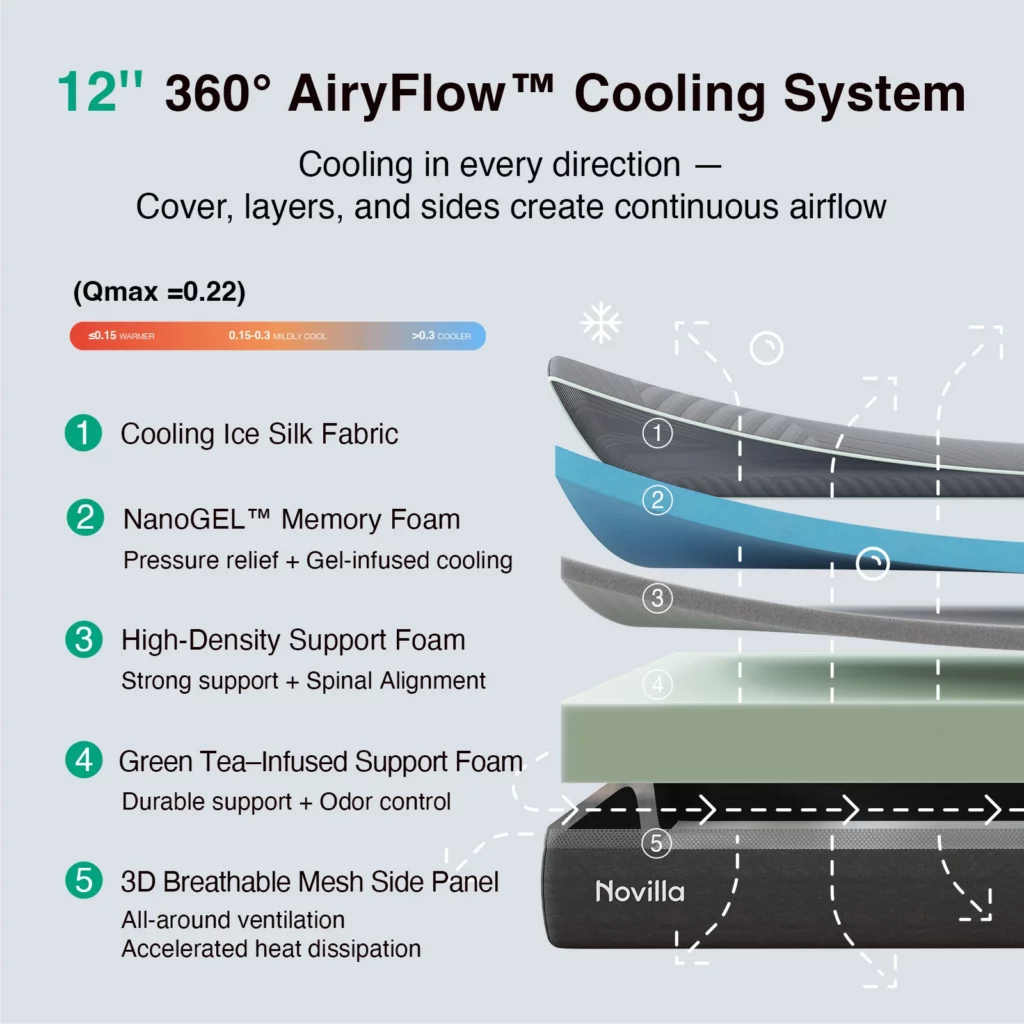
The AiryFlow is Novilla’s cooling-first flagship in their all-foam lineup. It sits above the entry-level Bliss and competes directly with other budget cooling mattresses in the $200-$600 range. The construction stacks an Advanced Cooling Ice Silk cover – rated at Qmax 0.22, which is a thermal conductivity measure indicating how quickly the fabric pulls heat from skin – over a layer of NanoGEL memory foam, followed by high-density support foam and green tea-infused support foam at the base. The sides feature the 3D breathable mesh that completes the “360-degree” airflow claim.
Firmness comes in at medium-firm, rated around 6 out of 10 on standard scales. That’s the sweet spot for most sleepers, sitting between soft contouring and firm support without going dramatically in either direction. Thickness options run from 10″ to 16″, though availability varies by retailer and size, and the queen in the 16″ profile runs around $510 – roughly 51% below the average price for memory foam mattresses according to NapLab’s cross-brand data. The mattress ships free with a 100-night sleep trial and a 10-year limited warranty. Worth noting: the 100-night trial is shorter than the category average of around 170 nights, and the 10-year warranty is below the industry norm when you factor in that roughly a quarter of competing brands now offer lifetime coverage.
The Cooling Claim: How Well Does It Actually Work?
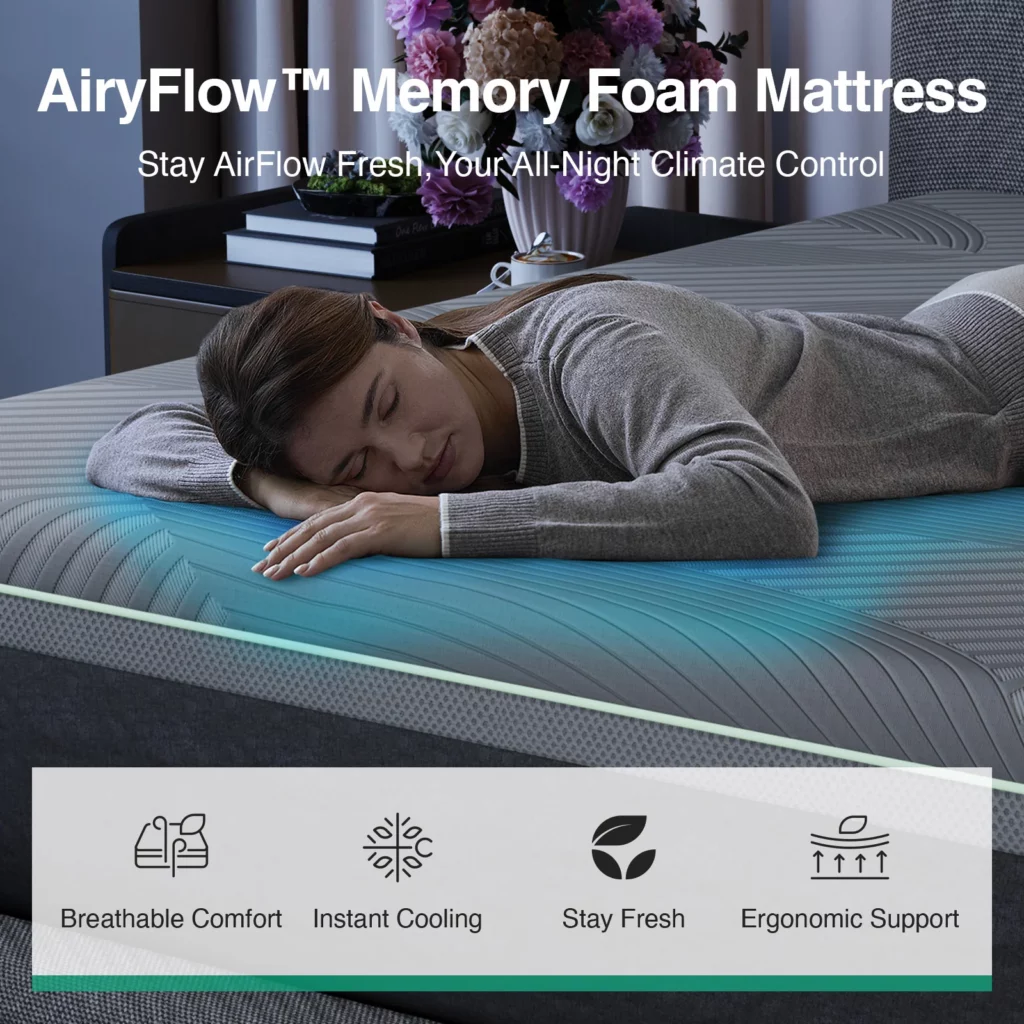
This is the heart of the AiryFlow’s pitch, so it deserves a direct look. Novilla’s marketing is confident – 30% cooler, 30% more breathable – and the material choices are legitimate cooling strategies. Ice Silk fabric does conduct heat away from skin more efficiently than standard knit covers. Gel-infused foam does help moderate temperature better than traditional memory foam.
But independent testing tells a more nuanced story. NapLab’s objective surface temperature measurements put the AiryFlow at 91.0°F maximum surface temp, which is actually 0.9°F warmer than the average across all mattresses they’ve tested. The surface cooled down 0.5°F slower than average after body contact was removed. Their conclusion: cooling performance is “fair” – better than old-school dense foam, but not the standout the marketing implies.
Multi-tester reviews from Dweva found the AiryFlow ran coolest among Novilla’s own foam lineup, staying “driest and least stuffy” compared to other all-foam options in the same test. That’s a meaningful win within the foam category. But heavier hot sleepers still noticed heat building up during longer sessions, particularly on warm nights. One frequently repeated user pattern from review aggregators and owner experiences: the AiryFlow handles moderate warmth well on its own, but if you’re genuinely a heavy sweater or sleep in a warm room without good airflow, you’ll likely still feel it by the early morning hours.
The practical takeaway from what real users report: the AiryFlow is a meaningful upgrade over standard budget foam for temperature, and light-to-average hot sleepers tend to be satisfied. Serious hot sleepers – particularly those over 200 lbs – are better served by a hybrid with open coil systems, where airflow is structural rather than surface-level.
The Ice Silk Cover and Mesh Sides
The cover does get consistent praise in user write-ups for feeling cool and soft to the touch on first contact. It’s described as having a noticeably different initial feel than a standard foam mattress cover – cooler and smoother when you lie down. The 3D breathable mesh sides are a thoughtful structural touch; they allow heat that’s built up inside the mattress to escape laterally rather than staying trapped. Whether that makes a perceptible nighttime difference depends on your sleep environment and body heat output, but it’s a meaningful design choice that budget competitors often skip.
Motion Isolation: The AiryFlow’s Strongest Card
Here’s where the AiryFlow genuinely earns its keep. Motion isolation is the one performance category where it consistently scores above average – across lab tests and in user reports alike.
NapLab’s testing put motion transfer “considerably lower than average” for both duration and intensity. Dweva’s partner-disturbance testing found that one partner getting in and out of bed created minimal disruption to the other side. This is the AiryFlow’s most consistent strength across every source that tested it. Couples who have dealt with being woken up by a restless partner show up repeatedly in positive user accounts – one frequently cited experience from real buyers describes barely noticing when their partner readjusted during the night after switching to this mattress, having previously dealt with significant sleep disruption on their previous bed.
This behavior is predictable from the construction: memory foam’s slow response rate, which is a disadvantage for combination sleepers who change positions often, is actually an advantage for motion isolation. When your partner shifts, the foam absorbs and dampens that movement rather than transmitting it across the surface. If you and a partner have meaningfully different sleep schedules or movement patterns, this is a legitimate reason to consider the AiryFlow over a more responsive foam or a budget hybrid.
Support and Pressure Relief: Good for the Right Body, Not for Everyone
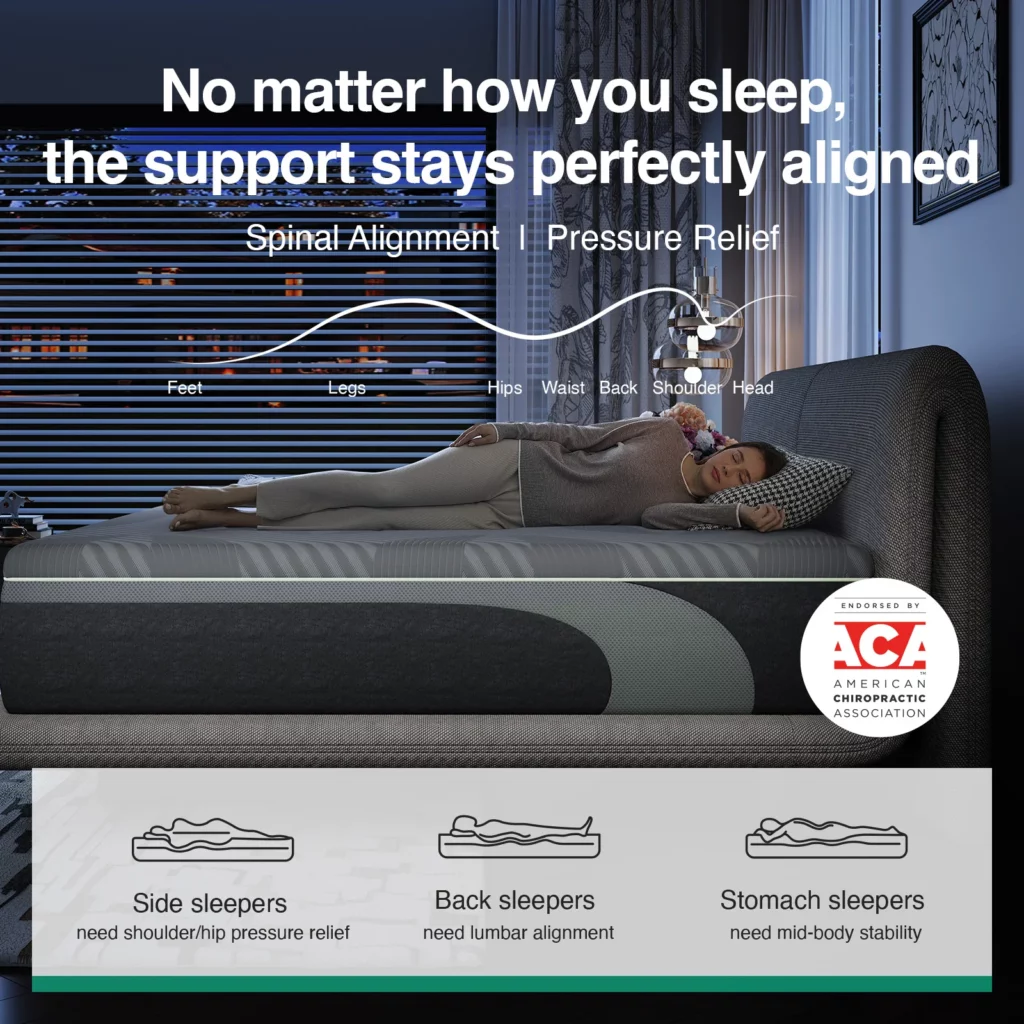
The AiryFlow delivers on pressure relief for back and side sleepers in the average weight range – roughly 130-230 lbs. NapLab’s pressure mapping tests measured a max PSI of 0.56, well within the 1.0 PSI threshold considered comfortable. Testing across multiple positions found shoulder sink appropriate for side sleepers, and lumbar support sufficient for back sleepers. Users in this demographic consistently report waking with less stiffness and better spinal alignment than on their previous budget mattresses.
The sinkage is deep – 2.38″ in NapLab’s tests, 0.14″ more than average. That depth is good news if you want a hugging, enveloping feel, and genuinely helpful for distributing shoulder and hip pressure. But it comes with consequences. First, the slow response time: NapLab measured material recovery at 0.8 seconds, nearly double the average of 0.41 seconds. If you’re a combination sleeper who rotates positions throughout the night, the AiryFlow will feel sticky and effortful to shift on. Users who change positions frequently describe needing to actively push out of the foam rather than rolling naturally.
Second, the weight limit is real. Multiple independent review sources flag that sleepers above 230 lbs find the AiryFlow too soft, with inadequate firmness and accelerated compression. The deeper sinkage that works well for lighter sleepers becomes a problem for heavier bodies – the mattress can’t provide enough pushback, and the foam compresses faster over time.
Edge Support: A Legitimate Weakness
Edge support is the AiryFlow’s most documented shortcoming, and it’s worth taking seriously rather than dismissing as a niche concern. NapLab measured 4.75″ of sitting edge sinkage – deep enough that sitting on the perimeter to put on shoes is noticeably unstable. Dweva’s testing noted the same thing. Users in long-term ownership accounts repeatedly mention that the edge collapses more than expected.
This matters in three practical scenarios: if you sit on the edge of the bed daily (it adds up over years), if you share the mattress and use the full sleeping surface, or if you have any mobility issues where a firm perimeter helps with getting in and out of bed. For older buyers or those with joint concerns, weak edge support is a real daily frustration. The AiryFlow uses no reinforced edge foam – the 3D mesh sides don’t provide structural support – so this is a construction limitation rather than a defect.
Pricing and Value: Where It Makes Sense
Current pricing puts the AiryFlow queen at around $510 in the taller profiles, with twin options starting as low as $199. That positions it as a genuinely affordable option – roughly half the average price for memory foam mattresses according to cross-brand pricing data. Promotions are common; promo codes from deal sites have brought king sizes to the $300-$360 range with free shipping.
The value math works well for a specific buyer profile: you want a foam mattress, you’re in the average weight range, you sleep on your back or side, and you’re not going to be upset if the mattress needs replacing in 5-7 years. For guest rooms, first apartments, kids transitioning to adult beds, or anyone needing a functional secondary mattress without significant investment, the AiryFlow is a sensible pick.
Where the value calculation gets murkier is long-term ownership. Durability concerns show up with enough frequency across review aggregators and forum posts to take seriously. Foam compression and softening within 6-12 months appear in user complaints – not universally, but consistently enough to note as a category pattern. Budget foam mattresses as a group compress faster than premium builds, and Novilla is not an exception to that rule. The 10-year warranty offers some protection, but the practical lifespan estimate from independent sources is closer to 5-7 years for everyday use.
Who Should Buy the Novilla AiryFlow
If you’re a back or side sleeper under 230 lbs who runs moderately warm, sleeps with a partner whose movement wakes you up, and needs a mattress in the under-$600 range – the AiryFlow is a genuinely good fit. It will deliver on pressure relief, motion isolation, and a cooler-than-average foam experience without asking you to overpay.
Users who are most satisfied with this mattress in the wild: light-to-average weight side sleepers who’ve previously dealt with shoulder or hip pressure, couples where one partner moves more than the other, and hot sleepers upgrading from a standard no-frills foam that was genuinely trapping heat.
Who Should Look Elsewhere
Heavy hot sleepers – particularly those over 230 lbs or anyone dealing with serious night sweats in a warm room – will likely be underwhelmed by what the cooling system can deliver. The data shows the AiryFlow runs close to average on objective temperature measures despite the marketing claims, and heavier bodies put more demand on foam cooling than lighter ones.
Combination sleepers who rotate positions frequently should also think twice. The slow response time is a real issue if you’re moving multiple times a night – the foam doesn’t snap back quickly enough to feel natural. And anyone who relies on a firm bed edge – whether for morning routines, sitting with a laptop, or mobility reasons – will find the perimeter consistently disappointing.
Stomach sleepers in general are poorly served by this mattress. The deep sinkage lets the hips sink enough to misalign the spine – a problem that tends to get worse as the foam compresses over time.
Bottom Line
The Novilla AiryFlow is a well-constructed budget foam mattress that does what it says – with honest limits. It cools better than standard foam, isolates motion better than most, and delivers real pressure relief for the sleeper it’s designed for. At roughly half the average price for the category, it offers genuine value for first-time buyers, guest rooms, and anyone who knows going in that they’re optimizing for comfort-per-dollar rather than longevity-per-dollar.
The cooling is improved, not transformed. That distinction matters if you’re a serious hot sleeper counting on this mattress to solve a real problem. The NanoGEL and Ice Silk cover will help; they won’t perform the way a hybrid with open coils will. And the edge support weakness and durability questions are consistent enough across enough sources to be treated as facts rather than exceptions. Go in expecting a comfortable, well-priced mattress with a realistic lifespan of 5-7 years, and the AiryFlow will probably exceed your expectations. Go in expecting a premium cooling experience or a decade of unchanged support, and it will eventually disappoint you.
So here’s the question worth putting in the comments: if you’re a hot sleeper on a tight budget, has a cooling foam mattress ever actually solved the problem for you – or does it always feel like a partial answer?
FAQ
Does the Novilla AiryFlow actually keep you cool?
It performs better than standard budget foam on cooling, thanks to the Ice Silk cover and NanoGEL memory foam layer. However, independent lab testing measured its surface temperature slightly above average across all mattresses tested. It’s a meaningful upgrade for light-to-moderate hot sleepers, but heavy sweaters or larger-bodied hot sleepers may still experience warmth buildup overnight.
How long does it take for the AiryFlow to fully expand after unboxing?
Novilla recommends waiting 72 hours for full expansion and to allow off-gassing to dissipate. Testing sources confirm it’s usable earlier – around 6-12 hours – but the feel stabilizes and smells better after the full window. Off-gassing duration was measured at around 7 days in NapLab’s testing, close to the industry average, so ventilating the room is worth doing.
Is the Novilla AiryFlow good for back pain?
For back and side sleepers in the average weight range (roughly 130-230 lbs), the AiryFlow’s medium-firm support and pressure-relieving foam construction have helped users with shoulder and lumbar stiffness. It won’t be enough for sleepers over 230 lbs, whose weight can push through the foam enough to compromise spinal alignment – particularly as the mattress compresses over time.
What are the biggest complaints about the Novilla AiryFlow?
The recurring patterns across review sources: weak edge support (perimeter sinkage is significant for sitting), slow foam response that makes position changes feel effortful, and durability questions around foam compression over time. Serious hot sleepers also note that the cooling, while improved, doesn’t fully solve heat buildup on warm nights.
How does the AiryFlow compare to other Novilla mattresses?
Within Novilla’s lineup, the AiryFlow is rated as the brand’s best all-foam option specifically for cooling. Multi-mattress comparison testing ranked it as running “coolest” among the foam models. For overall performance including edge support and responsiveness, the Vitality hybrid scored higher – but it costs more and doesn’t come in twin size.
Can heavier sleepers use the AiryFlow?
Not ideally. Multiple independent reviewers and lab testers flag the AiryFlow as insufficient for sleepers above 230 lbs. The foam sinkage becomes excessive at higher body weights, edge support deteriorates faster, and compression of the surface layers accelerates. Heavier sleepers are better served by a hybrid with a stronger coil system.
What foundation does the Novilla AiryFlow need?
The AiryFlow performs best on a firm, flat base – a platform bed with slats no more than 3 inches apart, or a modern box spring. A sagging or uneven foundation will make the foam feel less supportive and misaligned. Users who’ve noticed unexpected softness on the AiryFlow often trace it back to an inadequate base rather than the mattress itself.
Is the 100-night trial enough time to decide?
It’s functional but shorter than the category average of around 170 nights. For most sleepers, 100 nights is enough to gauge initial comfort and whether the firmness suits their position – but some durability issues (compression, edge softening) only appear after that window closes. Reading the return conditions carefully before purchasing is worth doing, as trial returns are handled through customer support rather than an automatic process.
Does it work on an adjustable base?
The AiryFlow is compatible with adjustable bed frames, and Novilla sells an AiryFlow adjustable bundle. The all-foam construction is flexible enough to conform to base positioning without structural damage. Users pairing it with an adjustable frame report no issues, though thick profiles (14″+) may not flex as easily at steeper angles.